
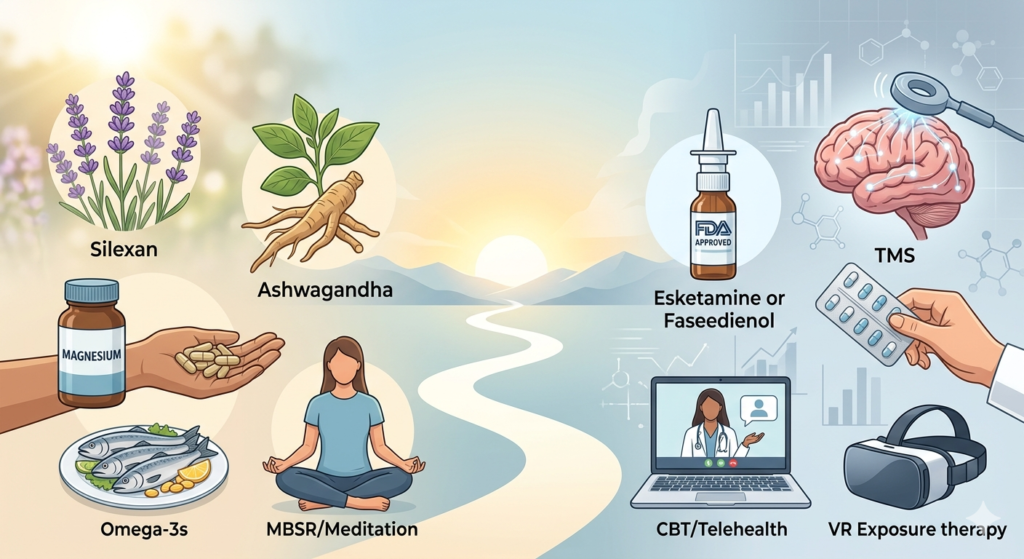
Managing anxiety in 2026 is no longer a choice between “natural” and “medical.” The most effective modern strategies often involve an Integrative Approach, blending the biological precision of non-organic treatments with the systemic harmony of organic remedies.
This comprehensive guide explores the top 10 treatments available today, ranging from time-tested herbal wisdom to the latest FDA-approved neuro-technologies.
Part I: Top 5 Organic Treatments
Organic treatments focus on supporting the body’s natural physiology, utilizing plant-based compounds and lifestyle adjustments to regulate the nervous system without synthetic intervention.
1. Magnesium and Adaptogenic Herbs
By 2026, the “stress-mineral” Magnesium has become a staple in anxiety management. It acts as a gatekeeper for NMDA receptors, preventing them from over-firing. When paired with adaptogens like Ashwagandha or Rhodiola Rosea, these organic compounds help the adrenal glands manage cortisol spikes more efficiently.
- Best for: Daily maintenance and physical symptoms of stress (muscle tension, palpitations).
2. Silexan (Standardized Lavender Oil)
Unlike the essential oils used in diffusers, Silexan is a pharmaceutical-grade, organic lavender oil capsule. Clinical trials have shown it to be non-inferior to certain low-dose benzodiazepines for Generalized Anxiety Disorder (GAD), but without the risk of sedation or dependency. It works by modulating voltage-gated calcium channels in the brain.
- Best for: Persistent, “background” worry and ruminating thoughts.
3. Mindfulness-Based Stress Reduction (MBSR)
While “organic” usually refers to substances, in mental health, it also encompasses “biologically natural” processes. MBSR is a structured program that uses meditation and yoga to physically shrink the amygdala (the brain’s fear center) over time. In 2026, many clinicians prescribe MBSR as a primary intervention alongside or before medication.
4. High-Dose Omega-3 Fatty Acids
The brain is approximately 60% fat. Organic, algae-based or cold-pressed fish oils containing high concentrations of EPA and DHA are essential for maintaining the fluidity of neuronal membranes. This allows neurotransmitters like serotonin to “dock” more effectively, naturally lifting mood and stabilizing the nervous system.
- Best for: Anxiety-induced “brain fog” and cognitive fatigue.
5. Probiotics and the Gut-Brain Axis
The discovery that 90% of the body’s serotonin is produced in the gut has led to the rise of Psychobiotics. Specific organic strains like Lactobacillus helveticus and Bifidobacterium longum have been shown to reduce “anxious gut” symptoms and lower systemic inflammation, which is a hidden driver of clinical anxiety.
Part II: Top 5 Non-Organic Treatments
Non-organic treatments involve clinical, synthetic, or technological interventions designed to target the brain’s chemistry or electrical patterns with high precision.
6. NMDA Receptor Modulators (Esketamine & Auvelity)
As of 2026, the focus of anxiety medication has shifted from just Serotonin (SSRIs) to Glutamate. Treatments like Esketamine (Spravato) and newer oral modulators provide rapid relief—often within hours—by repairing the synaptic connections that “wither” during chronic periods of high anxiety and depression.
- Best for: Treatment-resistant anxiety and acute crisis management.
7. Transcranial Magnetic Stimulation (TMS)
TMS is a non-invasive, non-organic procedure that uses magnetic pulses to stimulate specific nerve cells in the prefrontal cortex. It “re-trains” the brain’s electrical circuits. In 2026, Theta-Burst Stimulation (TBS) has shortened treatment times to just 3-10 minutes, making it a highly accessible clinical option.
8. Fasedienol (Pherine Nasal Sprays)
A breakthrough in 2026, Fasedienol is a first-in-class non-organic “pherine” nasal spray. Unlike traditional anti-anxiety meds, it does not need to enter the bloodstream or cross the blood-brain barrier. Instead, it binds to receptors in the nasal passage that send immediate signals to the hypothalamus, reducing social anxiety on demand without systemic side effects.
- Best for: Social Anxiety Disorder and “performance” anxiety.
9. Cognitive Behavioral Therapy (CBT) with VR Exposure
Traditional CBT has been upgraded with Virtual Reality (VR). This non-organic clinical tool allows patients to enter controlled, simulated environments to practice “exposure therapy” safely. It is considered the gold standard for specific phobias and Panic Disorder.
10. Next-Gen GABAergic Agents (GlyphAllo)
While old-school benzodiazepines (like Xanax) are falling out of favor due to addiction risks, 2026 has introduced GlyphAllo. This is a synthetic version of a natural neurosteroid that helps the brain use GABA (the “brakes” of the brain) more effectively, providing the calm of a sedative without the risk of long-term dependency.
Summary Table: Organic vs. Non-Organic
| Treatment | Category | Primary Mechanism | Speed of Action |
|---|---|---|---|
| Magnesium/Adaptogens | Organic | Cortisol regulation | Weeks |
| Silexan (Lavender) | Organic | Calcium channel modulation | Days to Weeks |
| MBSR/Meditation | Organic | Structural brain changes | Months |
| NMDA Modulators | Non-Organic | Glutamate/Synaptic repair | Hours to Days |
| TMS | Non-Organic | Electromagnetic stimulation | Weeks |
| Pherine Sprays | Non-Organic | Olfactory-neural signaling | Minutes |
Export to Sheets
Finding Your Path to Calm
Choosing between organic and non-organic treatments depends entirely on your symptom severity, medical history, and personal values. Many people find that a Hybrid Strategy—using non-organic treatments for acute symptom relief while building a foundation of organic health—leads to the most sustainable recovery.
Always consult with a licensed psychiatrist or healthcare provider before starting any new treatment regimen, especially when combining herbal supplements with clinical medications.
To learn more about optimizing your mental wellness journey and accessing supportive resources, visit Yourise.me.
Leave a Reply