

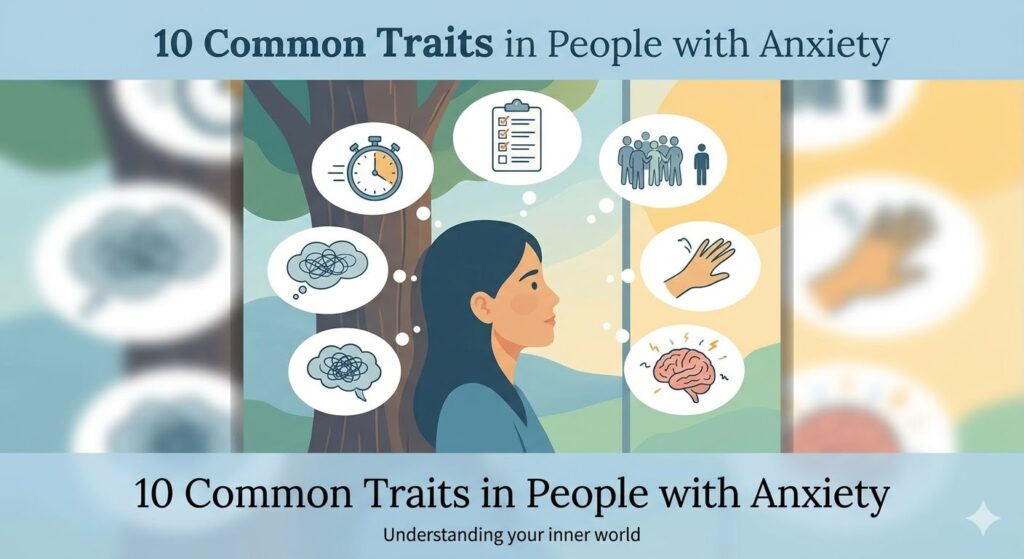
Anxiety is not a one-size-fits-all experience. It manifests differently in everyone, but there are certain common traits that often surface in people who experience anxiety. Understanding these traits can provide insight, validate your experiences, and potentially lead to better coping mechanisms. Here are 10 of the most common traits found in people with anxiety:
1. Excessive Worry and Rumination
One of the hallmark characteristics of anxiety is persistent, uncontrollable worry. People with anxiety often find themselves spiraling into negative thought loops, dwelling on “what-ifs,” and anticipating the worst-case scenario. This worry often extends beyond realistic concerns and can become consuming. Rumination, the act of repetitively thinking about distressing experiences, is also common.
2. Perfectionism and a Fear of Making Mistakes
Anxiety and perfectionism frequently go hand-in-hand. The fear of failure or criticism can lead individuals to set unrealistic expectations for themselves. They may strive for perfection in everything they do, believing that any mistake is a reflection of their worth. This constant pressure to be flawless can be incredibly stressful and can perpetuate anxiety.
3. Hypervigilance and a Heightened Sense of Danger
Anxious individuals often operate with a heightened level of awareness, constantly scanning their environment for potential threats. This hypervigilance can manifest as being easily startled, feeling on edge, or always expecting something bad to happen. It’s like having your internal alarm system permanently set to high alert.
4. Social Awkwardness and a Dread of Social Situations
For many people with anxiety, social interactions can be a major source of stress. The fear of being judged, scrutinized, or embarrassing oneself can lead to avoidance of social gatherings. They may overanalyze social interactions, feeling self-conscious and ruminating on what they said or didn’t say long after the event.
5. Difficulty Relaxing and a Restless Mind
Anxiety is often characterized by a persistent feeling of being unable to unwind. A restless mind that constantly churns with thoughts, worries, and list-making can make relaxation feel impossible. This constant mental activity can be physically and emotionally draining.
6. Physical Manifestations of Anxiety
Anxiety isn’t just a mental game; it can also manifest physically. Common physical symptoms include a racing heart, shallow breathing, muscle tension (especially in the jaw and shoulders), stomach upset, fatigue, and trouble sleeping. These physical sensations can be distressing and can further fuel anxious thoughts.
7. People-Pleasing and a Fear of Conflict
The desire to avoid disapproval can lead anxious individuals to engage in people-pleasing behaviors. They may have difficulty saying no, fearing that asserting their boundaries will lead to conflict or rejection. This constant focus on meeting others’ expectations can neglect their own needs and perpetuate anxiety.
8. Need for Control and a Dislike of Uncertainty
Anxiety often thrives on uncertainty. In an attempt to manage their fear, people with anxiety may develop a strong need for control. They may try to plan every detail of their lives, fearing that anything unexpected will lead to chaos or disaster.
9. Difficulty Concentrating and Brain Fog
When your mind is consumed by worry and rumination, focusing on a task can be a significant challenge. Anxiety can lead to difficulty concentrating, forgetfulness, and a feeling of “brain fog,” making everyday tasks feel more difficult.
10. Intrusive Thoughts and a Sense of Impending Doom
Anxious individuals may experience intrusive, unwanted thoughts that are distressing and persistent. These thoughts can range from worries about potential disasters to critical self-talk. In severe cases, anxiety can lead to a pervasive sense of impending doom, a feeling that something terrible is about to happen.
Understanding These Traits is Power
If you recognize many of these traits in yourself, know that you are not alone. These traits are common manifestations of anxiety, a treatable mental health condition. Understanding these patterns can be a crucial step towards seeking help and developing effective coping strategies. Therapy, such as Cognitive Behavioral Therapy (CBT), can provide tools to challenge negative thought patterns and manage physical symptoms. Remember, having anxiety does not define you, and with the right support, you can learn to manage its impact on your life.



Leave a Reply