

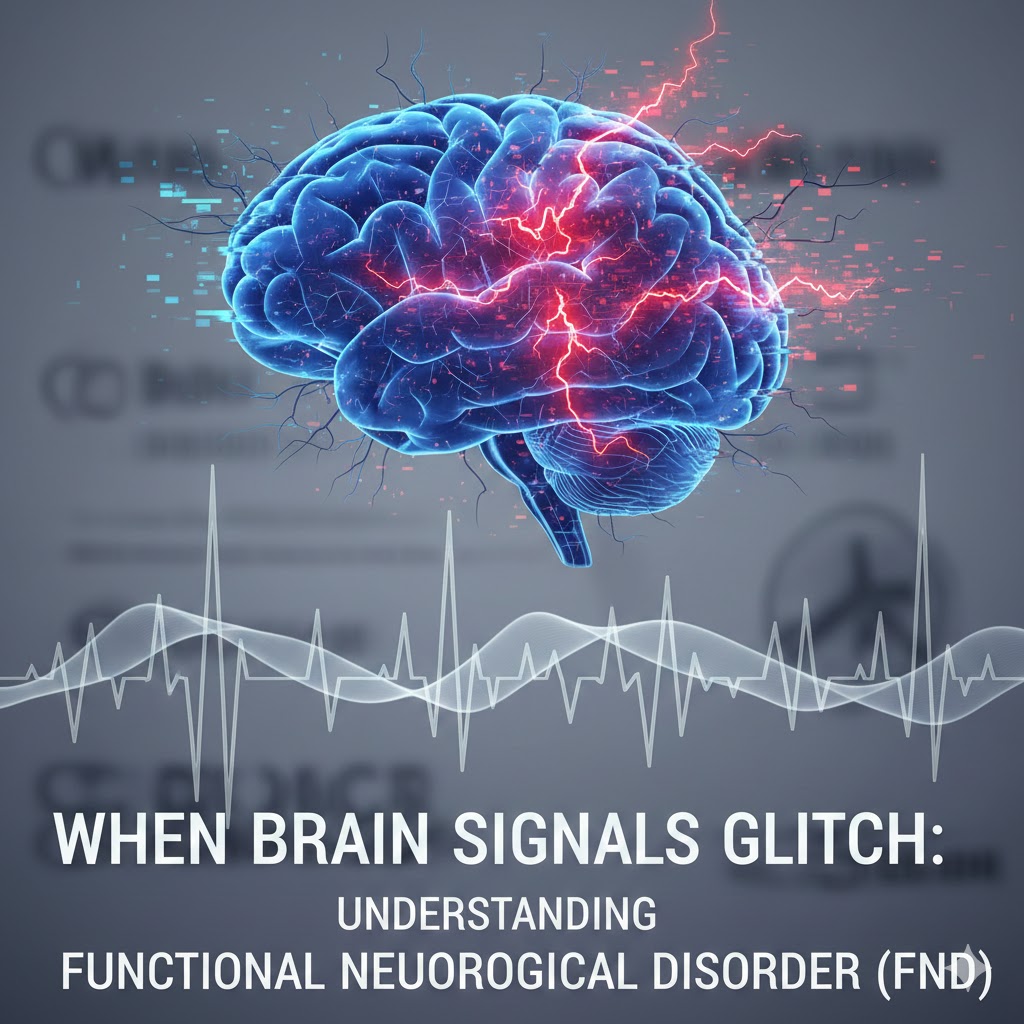
Functional Neurological Disorder (FND) is a condition where a person experiences real neurological symptoms, but routine tests such as MRI or CT scans do not show structural damage to the brain. Instead of a “hardware problem” in the brain, FND is thought of as a “software problem,” where the way the brain sends, receives, and processes signals is disrupted. This mismatch between severe symptoms and normal-looking tests often leads to confusion, doubt, and delayed diagnosis for many people living with FND.
What Is Functional Neurological Disorder?
FND is a disorder of nervous system functioning, not of nervous system structure. The brain and spinal cord appear normal on imaging, yet something has gone wrong in the way different brain networks communicate with each other and with the body. In practical terms, this means a person can have weakness, seizures, or speech problems that look like classic neurological diseases, but the underlying mechanism is different.
Modern research increasingly describes FND as a “brain network” disorder. Instead of a single lesion, there are changes in connectivity and communication between regions involved in movement, sensation, attention, emotion, and self-agency (the sense of control over one’s actions). This helps explain why the symptoms are genuine, why they often vary from moment to moment, and why they can be influenced by stress, focus of attention, and context.
Common Symptoms and How They Present
FND can affect movement, sensation, and cognition. No two people experience the condition in exactly the same way, and symptoms can range from mild and intermittent to severe and disabling. Many people have symptoms that come and go, change over time, or appear suddenly after a trigger such as an illness, injury, or major stress.
Some of the more common symptom patterns include:
- Motor symptoms: weakness or paralysis in a limb, tremors, jerks, sudden loss of coordination, or problems walking (functional gait disorder).
- Seizure-like events: episodes that resemble epileptic seizures but are not caused by abnormal electrical activity in the brain (often called functional or dissociative seizures, or psychogenic nonepileptic seizures).
- Sensory symptoms: numbness, altered sensation, visual disturbances, double vision, or hearing changes that cannot be fully explained by structural disease.
- Speech and cognitive symptoms: sudden stuttering, slurred speech, loss of voice, “brain fog,” memory problems, difficulty concentrating, or feeling mentally slowed.
Importantly, these symptoms are not under voluntary control. People are not “faking” or exaggerating; the symptoms are experienced as involuntary and often frightening. The pattern and internal inconsistencies that neurologists see on a detailed examination help them distinguish FND from other neurological diseases.
What Causes FND?
There is no single cause of FND. Instead, most experts view it as multifactorial, emerging from a combination of biological, psychological, and social factors. In some people, FND seems to start after a clear event such as a concussion, a physical injury, a panic attack, or a severe illness. In others, the onset is more gradual or appears without any obvious trigger.
Several mechanisms are actively being studied:
- Disrupted brain networks: Functional imaging studies show altered connectivity in brain regions that control movement, sensation, emotion, and self-agency. This can lead to movements or sensations that occur without a normal sense of control.
- Attention and prediction errors: The brain constantly predicts what should happen next in the body. In FND, these predictions and the attention given to bodily sensations may become distorted, so the brain “locks in” maladaptive responses like weakness, tremor, or seizures.
- Stress and emotional processing: Many individuals with FND have a history of chronic stress, trauma, anxiety, or depression, but this is not universal. When present, these factors may interact with brain networks that process danger, emotion, and bodily states, driving or maintaining symptoms.
- Learning and reinforcement: Once symptoms begin, they can be reinforced by patterns of movement, avoidance, fear of relapse, and the brain’s internal “memory” of symptoms. Over time, these patterns can become deeply ingrained, even if the original trigger has resolved.
FND does not require a psychological trauma to be “real.” Some people can identify a clear trauma, while others cannot; the validity of the condition does not depend on this. The key point is that FND arises from altered brain function, not from imagination or deliberate behavior.
Why Diagnosis Is Often Delayed
Because imaging and standard tests are often normal or nonspecific, people with FND can spend years seeking answers, shuttling between emergency rooms, specialists, and tests. They may be told “everything looks fine,” which can feel invalidating when symptoms are clearly not fine. This gap between subjective experience and objective test results is one of the most challenging aspects of the disorder.
A modern, accurate diagnosis of FND is not a “diagnosis of exclusion” made only after everything else is ruled out. Instead, neurologists look for positive clinical signs during examination that are characteristic of FND. Examples include:
- Inconsistency: A leg that appears weak in one test but can move strongly in another context.
- Distractibility: A tremor that decreases or disappears when the person is distracted with another task.
- Specific patterns: Gait or movement patterns that are typical of functional disorders rather than structural damage.
Recognizing these positive signs helps clinicians make a confident diagnosis and opens the door to appropriate treatment, rather than endless testing.
How FND Affects Daily Life
The impact of FND can be as severe as that of many better-known neurological illnesses. People may lose the ability to work, drive, or manage daily tasks. Frequent seizures or severe weakness can lead to falls, injuries, and repeated emergency visits. Fatigue, pain, sleep disruption, and cognitive difficulties can further erode quality of life.
Beyond the physical symptoms, the emotional and social consequences are significant. Many individuals report:
- Frustration at not being believed, or hearing that symptoms are “just stress.”
- Anxiety and fear about sudden symptom flares or unpredictable attacks.
- Isolation from friends, family, or colleagues who struggle to understand a condition that “doesn’t show up on scans.”
- Depression related to loss of independence, identity, or career.
Education—both for the person with FND and their support system—is a critical early intervention. When everyone involved begins to understand that FND is a real, brain-based condition with recognized treatment paths, it becomes easier to move from doubt and blame toward support and problem-solving.
Treatment and Recovery Options
Although FND can be disabling, many people improve significantly with the right combination of treatments. The goal is to “retrain” the brain and nervous system, helping the body relearn more normal patterns of movement, sensation, and response.
Key elements of evidence-informed care often include:
- Clear explanation of the diagnosis: A thorough, compassionate explanation from a knowledgeable clinician is itself therapeutic. Understanding that the symptoms are real, brain-based, and potentially reversible can reduce fear and open the door to change.
- Specialized physiotherapy and occupational therapy: Therapists experienced in FND focus on normalizing movement patterns, gradually increasing activity, and using distraction or automatic movement techniques to bypass abnormal patterns. The emphasis is less on strengthening muscles and more on retraining brain-body communication.
- Psychological therapies: Approaches such as cognitive behavioral therapy (CBT), trauma-focused therapy, or other forms of psychotherapy can help address anxiety, hypervigilance to symptoms, unhelpful beliefs about the body, and any underlying trauma or stress factors. This is not about saying “it’s all in your head,” but about changing how the brain processes and responds to internal and external signals.
- Multidisciplinary rehabilitation programs: In more complex or severe cases, integrated programs that combine neurology, physiotherapy, psychology, and occupational therapy in a coordinated way can offer the best chance of improvement.
- Medication for coexisting conditions: While there is no specific drug that “cures” FND, medications can help manage co-occurring problems like depression, anxiety, migraine, or chronic pain, which in turn can make rehabilitation efforts more effective.
Recovery is often gradual and non-linear. People may experience setbacks, symptom flares, or plateaus. Progress is usually measured in functional gains—walking further, having fewer seizures, returning to work—rather than complete symptom disappearance overnight. With persistence, many individuals see meaningful improvements in independence and quality of life.
Living Well With FND
Living with FND requires learning to balance self-compassion, realistic expectations, and active participation in rehabilitation. Building a supportive environment is crucial. This can include:
- Educating close family, friends, employers, and teachers about what FND is and is not.
- Developing routines that support nervous system regulation—regular sleep, gentle physical activity, pacing of tasks, and stress management strategies.
- Working with clinicians to set specific, functional goals rather than focusing solely on symptom counts.
- Connecting with reputable patient organizations or support groups, which can provide validation, shared experience, and practical tips for navigating the healthcare system.
While FND can be daunting, it is also an area of rapid research progress. As understanding of brain networks, prediction, and self-agency grows, clinicians are developing more targeted and hopeful approaches to diagnosis and treatment. For many, the turning point comes when they receive a clear, respectful explanation of FND, realize that their symptoms are valid and potentially reversible, and gain access to therapies that focus on retraining the brain rather than proving “what’s wrong” on a scan.



Leave a Reply