

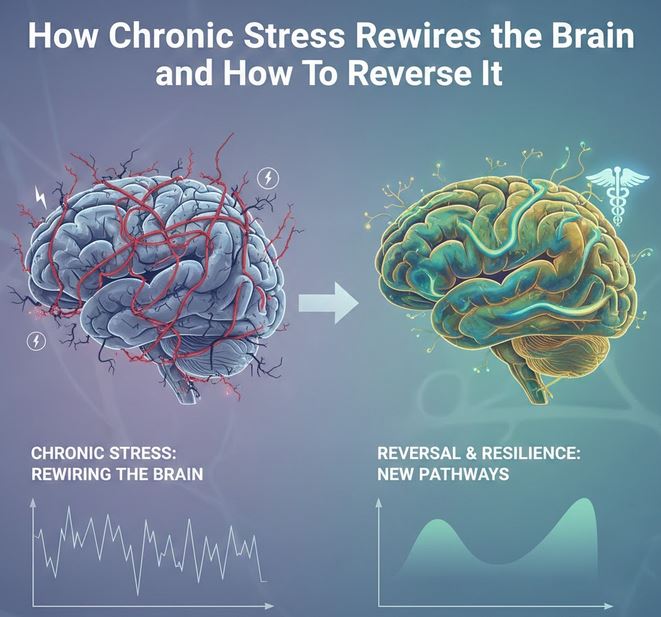
Stress touches nearly every part of modern life, but chronic stress does far more than make a person feel overwhelmed—it can literally reshape the brain and affect how the body thinks, feels, and functions over time. This article explains how long-term stress rewires key brain circuits and offers practical, evidence-informed strategies to help reverse those changes and restore healthier neurological balance.
What Is Chronic Stress?
Stress is the body’s natural response to a perceived threat, helping people react quickly in dangerous or demanding situations. Acute stress is short-lived; chronic stress is when this response stays activated for weeks, months, or even years.
When stress becomes chronic, the stress response that once protected the body starts to drain it instead. Hormones like cortisol and adrenaline remain elevated, blood pressure rises, digestion changes, and brain circuits adapt to this “always on” state. Over time, this can impair focus, sleep, memory, mood, and immune resilience.
How Stress Rewires the Brain
Chronic stress does not just change how people feel; it can change brain structure and function. Three areas are especially sensitive:
- Hippocampus (memory and learning)
- Elevated cortisol over long periods can shrink or damage neurons in the hippocampus, the region deeply involved in memory formation and spatial navigation.
- This can show up as brain fog, trouble learning new information, and difficulty recalling details, especially under pressure.
- Amygdala (fear and threat detection)
- The amygdala is the brain’s alarm center, scanning for danger and triggering the fight-or-flight response.
- Under chronic stress, the amygdala can grow more reactive and sensitive, making a person more prone to anxiety, emotional outbursts, and constant worry, even in relatively safe situations.
- Prefrontal cortex (focus and decision-making)
- The prefrontal cortex (PFC) governs planning, impulse control, and rational decision-making.
- Chronic stress can weaken connections between the PFC and other brain regions, making it harder to concentrate, control impulses, manage time, and think clearly when stressed.
These structural and functional shifts collectively create a brain that is wired for survival mode instead of growth, creativity, and long-term health. The more time a person spends in a stressed state, the more deeply these pathways are reinforced.
The Stress Cascade: From Brain to Body
When stress circuits stay activated, brain changes ripple through the whole body via the hypothalamic–pituitary–adrenal (HPA) axis and the autonomic nervous system.
- The HPA axis releases cortisol and other stress hormones that affect blood sugar, blood pressure, immune function, digestion, and inflammation.
- The sympathetic nervous system stays active (“gas pedal”), while the parasympathetic system (“brake”) struggles to restore calm, making it hard to relax, sleep deeply, or feel safe.
Over years, this stress cascade increases the risk for:
- High blood pressure and cardiovascular problems
- Insulin resistance and metabolic issues
- Poor gut health and immune imbalances
- Increased risk of mood disorders and cognitive decline
Because the brain and body are deeply interconnected, healing stress at a neurological level requires supporting the whole system, not just calming the mind.
Can the Brain Recover From Stress?
The encouraging news is that the brain is highly plastic—it can change and heal through a process known as neuroplasticity.
- New neural pathways can form when people adopt healthier habits and reduce stress exposure.
- Existing circuits can strengthen or weaken depending on repeated behaviors, thoughts, and emotional patterns.
This means that although chronic stress can rewire the brain in harmful ways, consistent lifestyle changes, mindset shifts, and nervous-system-focused practices can gradually reverse many of those effects. The key is repetition, safety, and creating an environment where the brain is no longer constantly bracing for threat.
Signs Stress Is Rewiring Your Brain
Recognizing early warning signs gives a person a chance to intervene before stress becomes deeply entrenched. Common indicators include:
- Persistent brain fog, forgetfulness, or trouble focusing
- Feeling “on edge” or easily startled, even when nothing obvious is wrong
- Emotional ups and downs, irritability, or sudden anger
- Trouble relaxing, falling asleep, or staying asleep
- Increased reliance on caffeine, sugar, or alcohol to cope
- Constant multitasking, racing thoughts, and difficulty being present
If several of these are showing up for weeks or months, it is a signal that chronic stress may be altering how the brain and nervous system operate.
Lifestyle Strategies to Reverse Stress-Driven Brain Changes
Reversing the effects of chronic stress on the brain requires a combination of reducing stress input and increasing signals of safety and restoration. The following pillars are powerful starting points.
1. Regulate the Nervous System Daily
Nervous system regulation techniques help switch the body from sympathetic (fight-or-flight) dominance to parasympathetic (rest-and-digest) mode. Simple practices can be highly effective when used consistently:
- Slow breathing: Aim for 4–6 breaths per minute (for example, inhale for 4 seconds, exhale for 6). Longer exhales signal safety to the brain and help calm stress circuits.
- Body-based grounding: Progressive muscle relaxation, gentle stretching, or somatic practices help bring awareness out of racing thoughts and back into the body.
- Vagus nerve stimulation: Humming, chanting, gargling, or cold face splashes can stimulate the vagus nerve, supporting calmer heart rate and improved emotional regulation.
Integrating 5–15 minutes of these tools two to three times per day can gradually retrain the nervous system to exit survival mode more easily.
2. Protect Sleep As Non-Negotiable
Sleep is one of the brain’s primary recovery mechanisms. During deep sleep, the brain clears metabolic waste, consolidates memories, and restores neurotransmitter balance. Chronic stress often disrupts sleep, but poor sleep also increases stress reactivity, creating a vicious cycle.
Helpful sleep-focused strategies include:
- Keeping a consistent sleep–wake schedule, even on weekends
- Dimming lights and avoiding intense screens at least an hour before bed
- Limiting heavy meals, caffeine, and alcohol in the evening
- Using a simple wind-down routine (stretching, reading, breathwork) to teach the brain that bedtime equals safety
As sleep quality improves, cortisol rhythms become more balanced, supporting better mood, cognition, and resilience to daily stress.
3. Move the Body to Protect the Brain
Physical activity is one of the most effective natural tools against chronic stress. Movement increases blood flow to the brain, boosts mood-regulating chemicals like serotonin and endorphins, and stimulates the growth of new neurons, especially in the hippocampus.
Aim for a mix of:
- Aerobic exercise: Brisk walking, cycling, swimming, or jogging most days of the week
- Strength training: 2–3 sessions per week to support metabolic health and reduce inflammation
- Gentle movement: Yoga, tai chi, or qigong to combine physical activity with relaxation and breath
Even 10–20 minutes of movement spread throughout the day is far better than none, especially for people who feel too stressed or tired for longer workouts.
4. Feed the Brain and Reduce Inflammation
Long-term stress increases inflammation and oxidative stress, both of which can damage brain cells. Nutrition can either fuel this process or help counteract it. Support brain recovery by:
- Focusing on whole foods: colorful vegetables, fruits, healthy fats (olive oil, avocados, nuts, seeds), and quality proteins
- Including omega-3-rich foods such as fatty fish, flaxseeds, or walnuts, which support brain structure and mood
- Reducing ultra-processed foods, excess sugar, and refined oils that can worsen inflammation and energy crashes
Hydration also matters; even mild dehydration can impair focus and increase feelings of fatigue or stress.
5. Rebuild Safe Connection and Community
Humans are wired for connection. Loneliness and isolation amplify stress signals in the brain, while safe, supportive relationships help regulate the nervous system. A single caring conversation can lower heart rate, reduce cortisol, and shift brain chemistry toward calm and trust.
To counteract chronic stress, prioritize:
- Regular time with people who feel safe, encouraging, and nonjudgmental
- Group activities that bring meaning, such as classes, spiritual communities, or support groups
- Honest communication about stress instead of holding everything inside
Even small steps—such as a weekly check-in call with a friend—can help teach the brain that it does not have to carry stress alone.
6. Train the Mind Away From Constant Threat
Thought patterns can keep the brain locked in stress mode even when the environment is relatively safe. Practices that retrain attention and interpretation can loosen this grip.
- Mindfulness: Regularly noticing thoughts and sensations without judgment helps the brain step out of automatic reactivity. Short daily sessions are more powerful than occasional long ones.
- Cognitive reframing: Challenging catastrophic thinking (“This will ruin everything”) and replacing it with more realistic alternatives helps tone down the perceived threat level.
- Gratitude and savoring: Intentionally focusing on small positive experiences and writing them down can gradually re-balance the brain’s bias toward scanning for danger.
Over time, these tools reduce stress-driven activity in the amygdala and strengthen the prefrontal cortex’s ability to modulate emotional responses.
When To Seek Professional Support
While lifestyle changes are powerful, it is important to seek professional help if stress is causing significant impairment or if there are symptoms such as persistent anxiety, depression, panic attacks, or thoughts of self-harm. Licensed mental health professionals, medical providers, and integrative practitioners can offer:
- Personalized evaluation of stress-related symptoms and nervous system function
- Therapy approaches that target both cognitive and body-based aspects of stress
- Guidance on medication, supplements, or additional treatments when needed
Early support can prevent chronic stress from leading to more serious neurological and health consequences.
Bringing It All Together
Chronic stress is not just a feeling; it is a physical, neurological state that can reshape the brain and body over time. The same neuroplasticity that allows stress to rewire the brain also provides the path toward healing. By consistently calming the nervous system, supporting brain health through sleep, movement, nutrition, connection, and mindset work, it is possible to reverse many stress-driven changes and move from survival mode into a more stable, focused, and resilient way of living.
For anyone feeling trapped in constant stress, even tiny daily shifts—one extra minute of slow breathing, a short walk, a better bedtime—are signals to the brain that life can become safer, calmer, and more balanced again.




Leave a Reply