

The Definitive Guide to Treatments For Depression: 20 Organic & Non-Organic Solutions for 2026
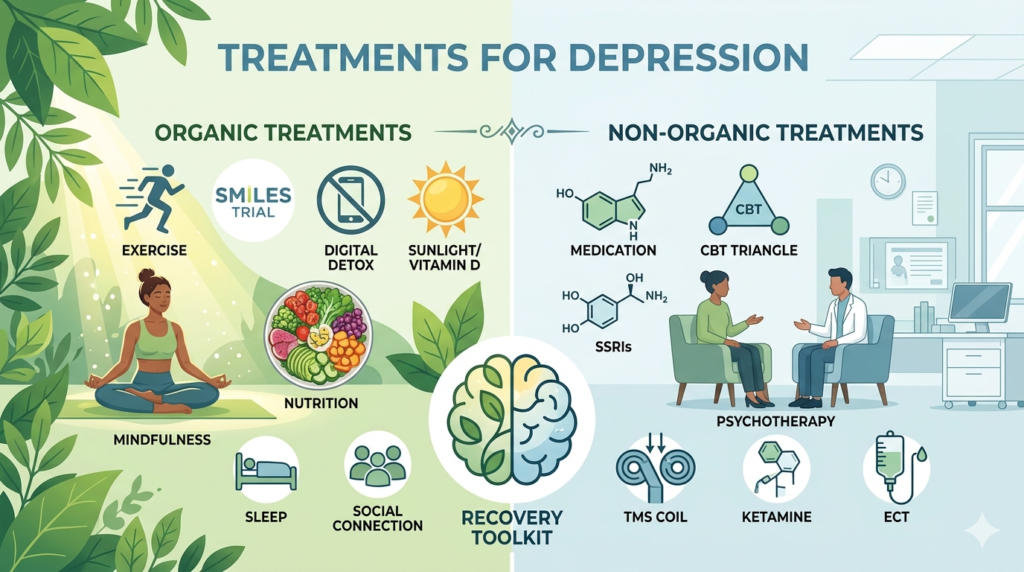
Depression is a systemic condition that requires a systemic response. Whether you are navigating a first-time episode or managing treatment-resistant depression, understanding the full spectrum of treatments for depression is the first step toward reclaiming your life.
The modern approach to mental health focuses on “Integrative Psychiatry”—the blending of organic, lifestyle-driven methods with non-organic, clinical interventions. This guide provides an exhaustive look at 20 pathways to recovery, supported by clinical evidence and real-world case studies.
Part 1: Top 10 Organic Treatments For Depression
Organic treatments focus on the biological foundations of health: inflammation, nutrition, and environmental harmony.
1. High-Intensity & Resistance Exercise
Exercise is the most potent “organic” antidepressant. Physical activity increases the production of Brain-Derived Neurotrophic Factor (BDNF), which helps repair neurons damaged by chronic stress.
- The Evidence: A landmark study published in the British Journal of Sports Medicine found that exercise is 1.5 times more effective than counseling or leading medications for managing depression.
- Outbound Reference: Read the BMJ Study on Exercise vs. Meds
2. Nutritional Psychiatry & The Mediterranean Protocol
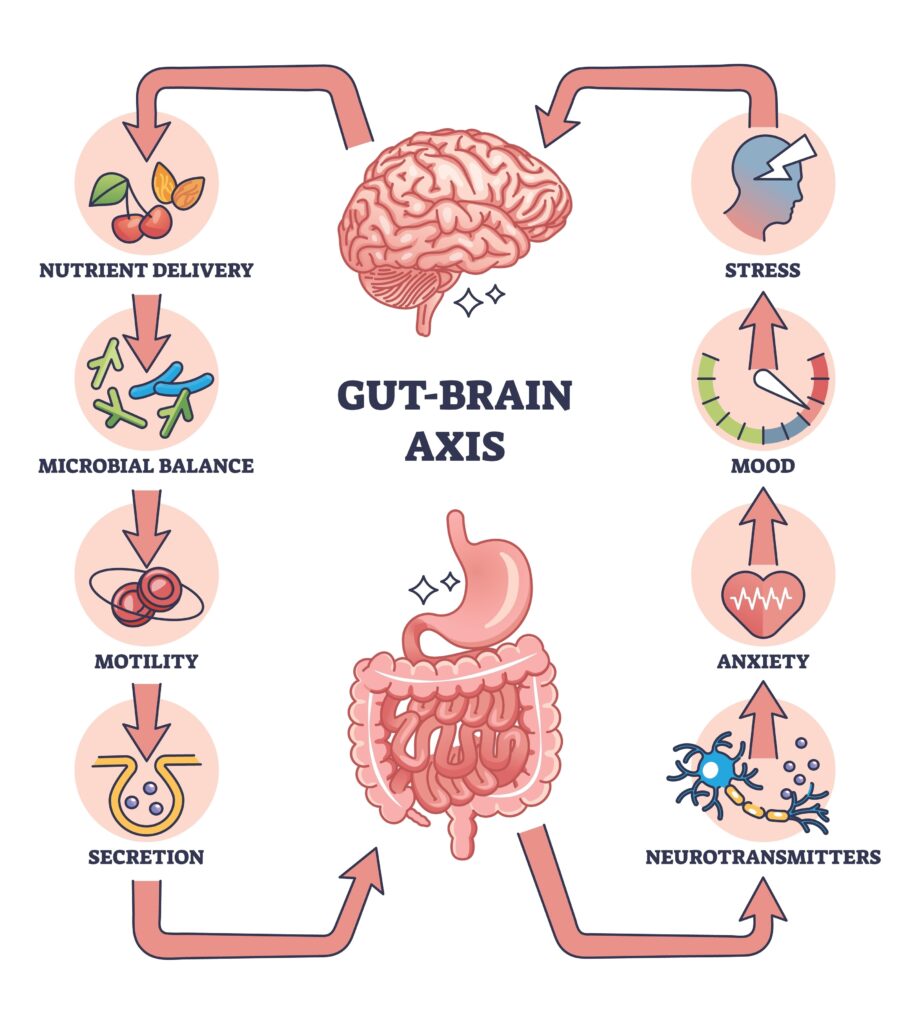
The “Gut-Brain Axis” is no longer a theory; it is a clinical reality. Diets high in refined sugars trigger systemic inflammation, which “shuts down” mood-regulating centers in the brain.
- Case Study: The SMILES Trial was the first intervention to show that individuals with moderate-to-severe depression could achieve remission simply by switching to a Mediterranean-style diet rich in Omega-3s and polyphenols.
- Outbound Reference: Access the SMILES Trial Findings via BMC Medicine
3. Mindfulness-Based Cognitive Therapy (MBCT)
MBCT combines the “focus” of meditation with the “logic” of psychology. It is specifically designed to stop the “downward spiral” of negative thoughts. By staying in the present moment, patients prevent the brain from drifting into the past (regret) or the future (anxiety).
- Outbound Reference: Oxford University Research on MBCT Efficacy
4. Circadian Rhythm & Sleep Optimization
Sleep is the brain’s “waste management” period. Without 7–9 hours of quality sleep, the brain cannot clear out metabolic waste, leading to the “brain fog” typical of depression.+1
- Organic Hack: View sunlight within 30 minutes of waking to “anchor” your cortisol spike, making it easier to produce melatonin at night.
5. Therapeutic Sunlight & Vitamin D
Vitamin D acts more like a hormone than a vitamin, directly influencing the expression of genes that produce serotonin. For those in northern latitudes, Light Therapy (10,000 lux) serves as an organic surrogate for the sun.
6. Herbal Adaptogens (Ashwagandha & Rhodiola)
Adaptogens are plants that help the body “adapt” to stress. Ashwagandha has been clinically shown to reduce cortisol levels, while Rhodiola Rosea may improve mental fatigue and burnout.+1
- Outbound Reference: Clinical Study on Ashwagandha and Stress
7. Social Capital & Meaningful Connection
Loneliness triggers a “pro-inflammatory” gene response in humans. Organic treatment involves “Social Prescribing”—joining groups or volunteering to stimulate the release of oxytocin, which counteracts the damage caused by the stress hormone cortisol.
8. Vagus Nerve Stimulation (VNS) via Breathwork
You can manually flip your body’s “calm switch” through the breath. Techniques like Cyclic Sighing (two inhales, one long exhale) stimulate the vagus nerve, immediately lowering heart rate and blood pressure.+1
9. Forest Bathing (Phytoncide Exposure)
Spending time in a forest isn’t just a “walk.” Trees emit phytoncides (organic essential oils) that have been shown to increase the activity of “Natural Killer” cells and lower anxiety scores significantly.
10. Digital Detox & Dopamine Fasting
Over-stimulation from social media creates “dopamine resistance,” leaving you unable to enjoy simple pleasures. An organic treatment involves periodic fasts from screens to allow the brain’s reward system to “re-sensitize.”+1
Part 2: Top 10 Non-Organic Treatments For Depression
Non-organic treatments involve medical, pharmacological, and technological interventions conducted by healthcare professionals.
1. Selective Serotonin Reuptake Inhibitors (SSRIs)
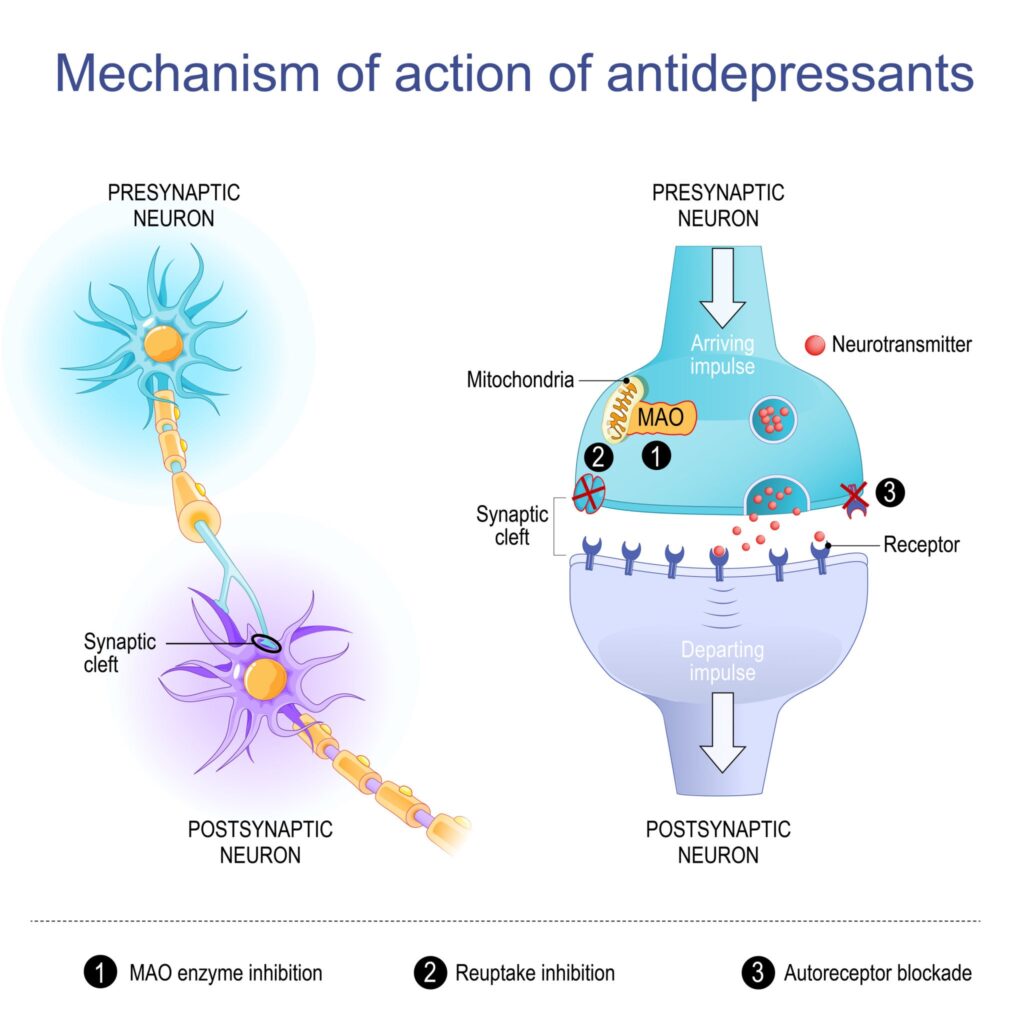
SSRIs remain the cornerstone of pharmacological treatments for depression. By increasing the concentration of serotonin in the synaptic cleft, they allow for more efficient neural signaling.
- Outbound Reference: Mayo Clinic Guide to SSRIs
2. Serotonin-Norepinephrine Reuptake Inhibitors (SNRIs)
SNRIs are often used when a patient presents with “anhedonia” (the inability to feel pleasure) and physical pain. By boosting norepinephrine, these medications provide the “drive” that serotonin-only meds sometimes lack.
3. Cognitive Behavioral Therapy (CBT)
CBT is the most studied form of psychotherapy. It is a “non-organic” mental exercise that deconstructs the logical fallacies the depressed brain creates, such as “catastrophizing” or “black-and-white thinking.”
- Outbound Reference: CBT Principles via the American Psychological Association
4. Transcranial Magnetic Stimulation (TMS)
TMS is a revolutionary medical treatment that uses magnetic pulses to “wake up” underactive regions of the brain. It is entirely non-invasive and is often the “gold standard” for patients who cannot tolerate the side effects of medication.
- Case Study: A 2022 study showed that “Accelerated TMS” could induce remission in as little as five days for some patients.
- Outbound Reference: Stanford Medicine Study on Accelerated TMS
5. Ketamine & Esketamine Therapy
Ketamine works on Glutamate, the brain’s most abundant excitatory neurotransmitter. While SSRIs take weeks to work, Ketamine can lift suicidal ideation within hours by creating a “burst” of neural connectivity.
6. Interpersonal Psychotherapy (IPT)
IPT is a structured medical therapy that views depression as a “socially triggered” illness. It focuses on four areas: grief, role disputes, role transitions, and interpersonal deficits.
7. Electroconvulsive Therapy (ECT)
Reserved for the most severe cases, ECT is a safe medical procedure performed under anesthesia. It is the fastest-acting treatment for “Catatonic Depression” and has been refined significantly over the last 30 years to minimize memory loss.
8. Dialectical Behavior Therapy (DBT)
DBT is essential for patients with “Treatment-Resistant Depression” who also struggle with emotional dysregulation. It combines non-organic clinical strategies with “Distress Tolerance” skills.
9. Atypical Antidepressants (Bupropion)
Bupropion is unique because it targets Dopamine. It is often used as an “add-on” to SSRIs to counteract side effects like weight gain or sexual dysfunction, making it a versatile tool in the psychiatrist’s kit.
10. Vagus Nerve Implant (Surgical VNS)
For those who have failed every other treatment, a small device can be surgically implanted to provide constant, low-level stimulation to the vagus nerve. This “pacemaker for the brain” provides long-term stabilization for chronic depression.
Part 3: Deep-Dive Case Study: The Integrated Approach
How combining Organic and Non-Organic methods changes lives.
The Subject: “Michael,” a 42-year-old male with chronic Major Depressive Disorder (MDD). For five years, Michael tried various SSRIs with minimal success. He suffered from “Brain Fog” and weight gain, which led him to stop his medication.
The Intervention: Michael’s team implemented a “Dual-Track” protocol:
- Non-Organic: He underwent a 6-week course of TMS to stimulate his prefrontal cortex.
- Organic: Simultaneously, he was put on a 16:8 Intermittent Fasting schedule and prescribed 5,000 IU of Vitamin D daily.
The Result: Within three weeks, Michael reported a “lifting of the veil.” The TMS provided the neurological “spark,” while the fasting and Vitamin D reduced the systemic inflammation that had previously made his medications feel ineffective. By month six, Michael was in full clinical remission.
Final Thoughts: Building Your Recovery Toolkit
The most effective treatments for depression are rarely found in a single pill or a single lifestyle change. True recovery happens at the intersection of the two.
- If you are feeling physically stuck, look to Non-Organic clinical interventions to provide the momentum.
- If you are looking to maintain long-term stability and prevent relapse, look to Organic lifestyle foundations.
Recovery is a marathon, not a sprint. By utilizing the 20 tools outlined above, you can build a personalized strategy that honors both your biology and your lifestyle.
Leave a Reply