

The High-Performer’s Paradox: Fighting Burnout with Actionable Rest
In a modern culture dominated by the “always-on” mentality, sleep is frequently the first item sacrificed on the altar of ambition. High achievers often view sleep as a passive utility—a time-sink that subtracts from billable hours, fitness routines, and personal development.
However, clinical research reveals a vastly different reality. Rest is not passive downtime; it is an active, metabolic reset that dictates daily cognitive bandwidth, hormonal balance, physical energy, and workplace output.
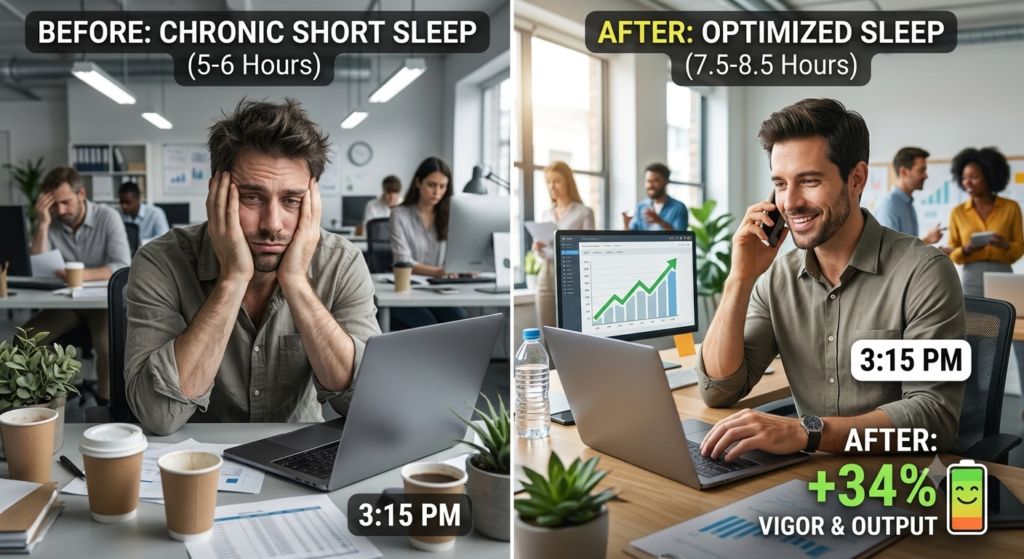
When you consistently operate on 5 to 6 hours of sleep, you don’t just feel slightly tired—you operate under a state of chronic cellular fatigue. Extending your sleep duration by just 1.5 hours per night can lead to a 34% increase in daytime vigor and energy scores, while dramatically sharpening focus and long-term vitality.
1. The Energy Equation: Why Quantity Fuels Physical Vigor
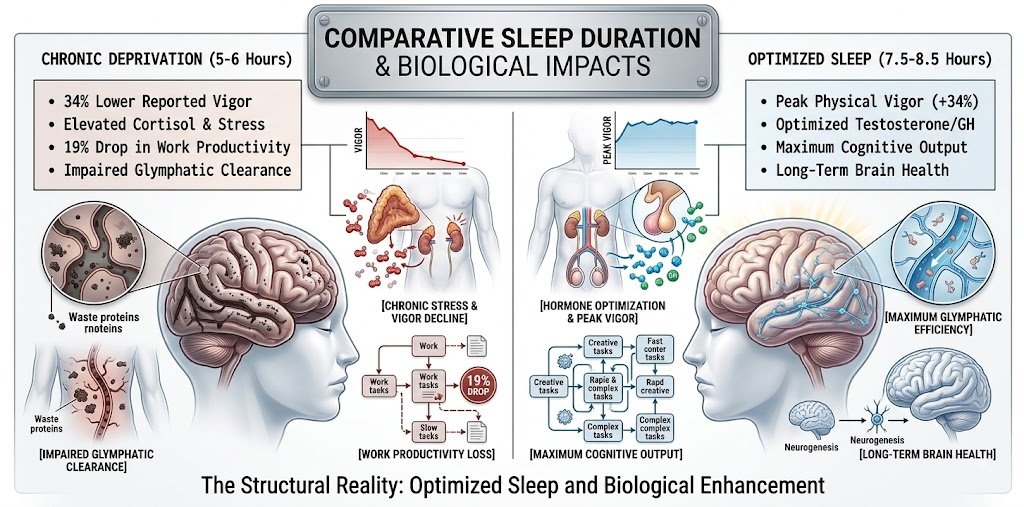
The connection between sleep duration and subjective vitality is backed by hard quantitative research. Sleep extension studies—where chronic short sleepers increase their nightly rest by 60 to 90 minutes—demonstrate pronounced shifts in mood, endurance, and perceived energy levels.
When researchers measure daily vigor using standardized psychological tools such as the Profile of Mood States (POMS), participants who extend their sleep experience a remarkable jump in energy metrics.
| Sleep Metric | Short Sleep (5.5 – 6 Hours) | Extended Sleep (7.5 – 8 Hours) | Net Impact |
| Daytime Vigor Score | Baseline / Suppressed | +34% Increase | Dramatic Rise in Sustained Vitality |
| Workplace Output | 19% Productivity Loss | Optimized Efficiency | Higher Earnings & Output |
| Reaction Time | 15–20% Slower | Peak Performance | Reduced Errors & Fatigue |
| Cellular Recovery | Elevated Inflammation | Downregulated Stress | Faster Physical Recovery |
The Biological Engine of Vitality
- ATP Resynthesis: During deep Non-REM (NREM) sleep, the brain and muscles restore adenosine triphosphate (ATP), the primary energy currency of human cells.
- Hormonal Balance: Lengthening the sleep window stabilizes growth hormone (GH) secretion and testosterone release, both of which are critical for muscle repair, physical drive, and daily stamina.
- Adrenal Reset: Chronic sleep deprivation causes persistent elevation of evening cortisol. Adding 1.5 hours of sleep normalizes the hypothalamic-pituitary-adrenal (HPA) axis, eliminating the dreaded 3 PM energy slump.
2. Career ROI: Turning Extra Sleep Into Higher Earnings and Focus
For high-performing professionals, sleep quality directly dictates career trajectory. Pushing through fatigue to send late-night emails yields diminishing returns. Research from top economic institutions shows that sleep optimization is one of the highest-ROI productivity tools available.
Economic Insight: Economists studying labor productivity found that increasing average weekly sleep by just one hour leads to a 3.4% to 5% increase in long-term wages. Sleep isn’t an obstacle to professional growth—it is an economic lever.
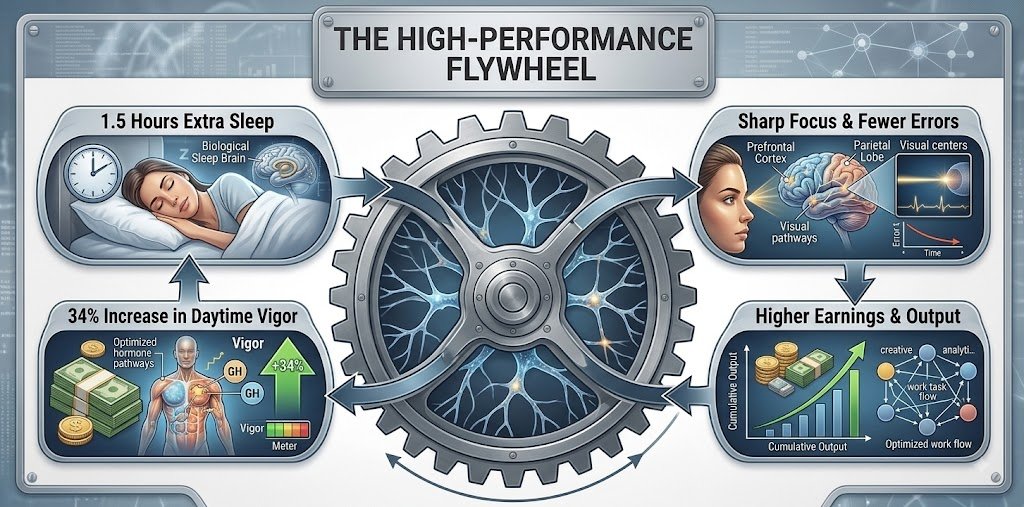
Furthermore, an extensive study published by the RAND Corporation highlighted that insufficient sleep costs national economies hundreds of billions of dollars annually in lost productivity and missed work. Individuals sleeping less than six hours per night face a 19% drop in workplace productivity compared to colleagues who secure seven to eight hours.
3. The Glymphatic System: Protecting Brain Health Without the Jargon
Beyond daily performance and physical attractiveness, adequate sleep serves as an essential biological shield against neurodegenerative decline. To understand why sleep prevents long-term cognitive loss, one must examine the brain’s unique waste-clearance system.
Unlike the rest of the body, which relies on the lymphatic system to remove cellular waste, the brain utilizes the glymphatic system.
How the Glymphatic System Operates:
- Sleep Activation: The glymphatic system remains largely inactive during waking hours.
- Brain Cell Contraction: During deep slow-wave sleep, interstitial space in brain tissue increases by approximately 60%.
- Cerebrospinal Fluid (CSF) Flow: Cerebrospinal fluid rushes through brain tissue, flushing out toxic metabolic waste products.
- Protective Clearance: This process removes beta-amyloid and tau proteins—the primary biomarkers linked to Alzheimer’s disease and cognitive dysfunction.
By expanding your sleep window from 6 to 7.5 hours, you allow your brain to complete multiple full deep-sleep cycles, ensuring complete metabolic clearance every night.
4. Sleep Architecture: Mastering the 90-Minute Cycle
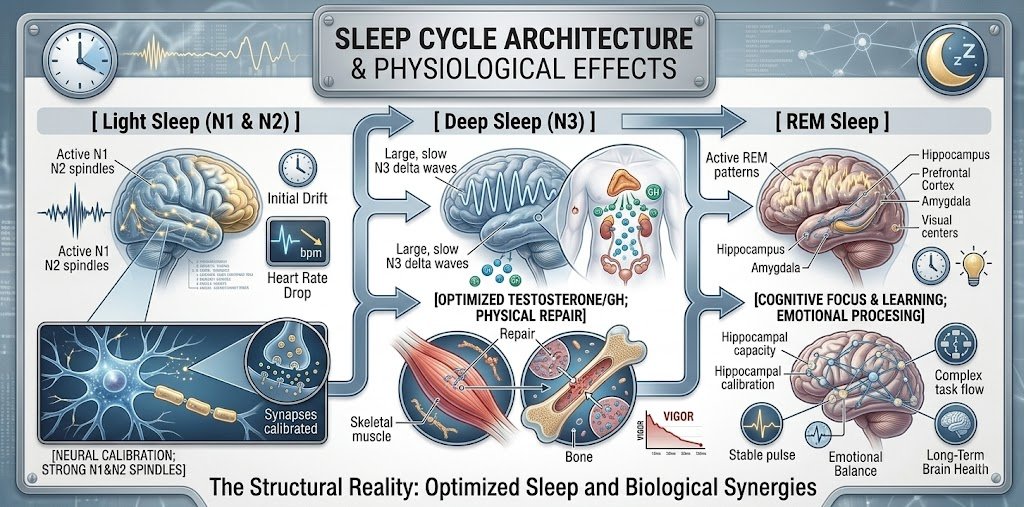
To unlock the 34% increase in daily vigor, it is not enough to simply lie in bed longer—you must respect human sleep architecture. Sleep progresses in predictable, 90-minute cycles consisting of four distinct stages.
Breakdown of the Sleep Stages
- N1 & N2 (Light Sleep): The transition phases where heart rate slows and body temperature drops. N2 plays a vital role in motor skill consolidation and daily memory processing.
- N3 (Deep / Slow-Wave Sleep): The restorative powerhouse. Tissue repair occurs, growth hormone is released, and physical fatigue is resolved. This stage provides the foundation for bodily energy.
- REM (Rapid Eye Movement) Sleep): The stage responsible for emotional regulation, creative problem-solving, and cognitive sharpness.
When you curtail your sleep duration by 1.5 hours, you do not simply lose a random portion of sleep. Because deep sleep predominates in the first half of the night and REM sleep dominates the second half, cutting 90 minutes off your morning window selectively deprives you of up to 50% of your total REM sleep, leading to brain fog, irritability, and reduced emotional resilience.
5. Practical Protocols: How to Add 1.5 Hours of Sleep Safely
Transitioning from a 6-hour sleep schedule to an optimized 7.5-hour window requires a systematic approach rather than an overnight shift. Use these medically validated protocols to extend your sleep duration smoothly:
A. The “Shift-by-15” Protocol
Attempting to go to sleep 90 minutes earlier all at once usually results in tossing and turning. Instead, advance your bedtime by 15 minutes every 3 to 4 days. Within three weeks, your circadian rhythm will naturally adapt to the 90-minute extension.
B. Thermal and Light Regulation
- View Morning Sunlight: Expose your eyes to natural sunlight within 30 minutes of waking to anchor your circadian master clock (the suprachiasmatic nucleus).
- Cool Your Environment: Keep your bedroom between 65°F and 68°F (18°C–20°C). Core body temperature must drop by 2°F to initiate and sustain deep sleep.
- Eliminate Blue Light: Block blue-spectrum light 90 minutes before bed to permit the natural, uninhibited release of endogenous melatonin.
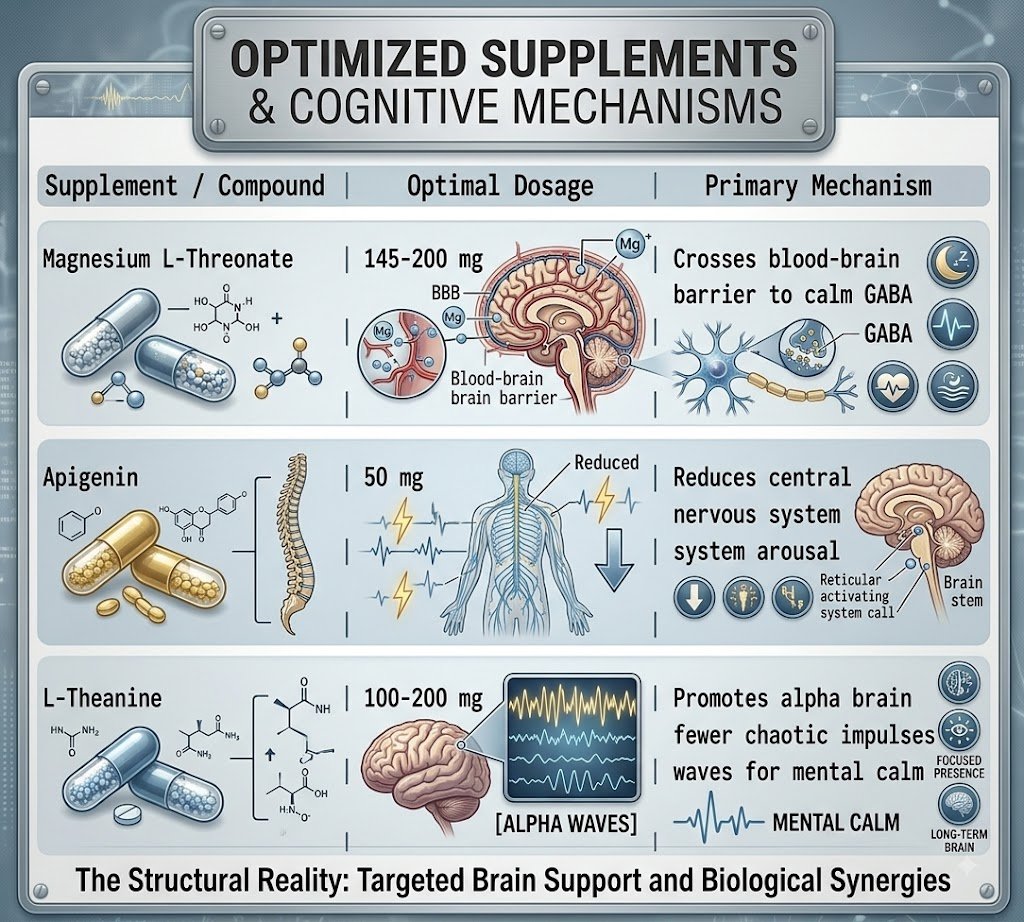
C. Supplementation and Evening Nutrition
Avoid reliance on sedative drugs, which destroy natural sleep architecture and suppress REM cycles. Instead, support natural relaxation pathways:
Conclusion: Claiming Your 34% Performance Advantage
Superior energy, career performance, and personal vitality are not achieved by pushing through physical limits—they are built on foundationally sound biological habits.
By prioritizing an extra 1.5 hours of high-quality sleep, you capture an immediate 34% gain in daily vigor, shield your brain against cognitive decline, and optimize your daily output. Sleep is not lost time; it is the ultimate force multiplier for high achievers.
Academic & Clinical References
- Gibson, M., & Shrader, J. (2018). Time Use and Labor Productivity: The Returns to Sleep. The Review of Economics and Statistics, 100(5), 783–798.
- Hafner, M., Stepanek, M., Taylor, J., Troxel, W. M., & Stolk, C. C. (2017). Why Sleep Matters: The Economic Costs of Insufficient Sleep. RAND Health Quarterly, 6(4), 11.
- Xie, L., Kang, H., Xu, Q., Chen, M. J., Liao, Y., Thiyagarajan, M., … & Nedergaard, M. (2013). Sleep drives metabolite clearance from the adult brain. Science, 342(6156), 373–377.
- Mah, C. D., Mah, K. E., Kezirian, E. J., & Dement, W. C. (2011). The effects of sleep extension on the athletic performance of collegiate basketball players. Sleep, 34(7), 943–950.
- Walker, M. P. (2017). Why We Sleep: Unlocking the Power of Sleep and Dreams. Scribner Book Company.




Leave a Reply