

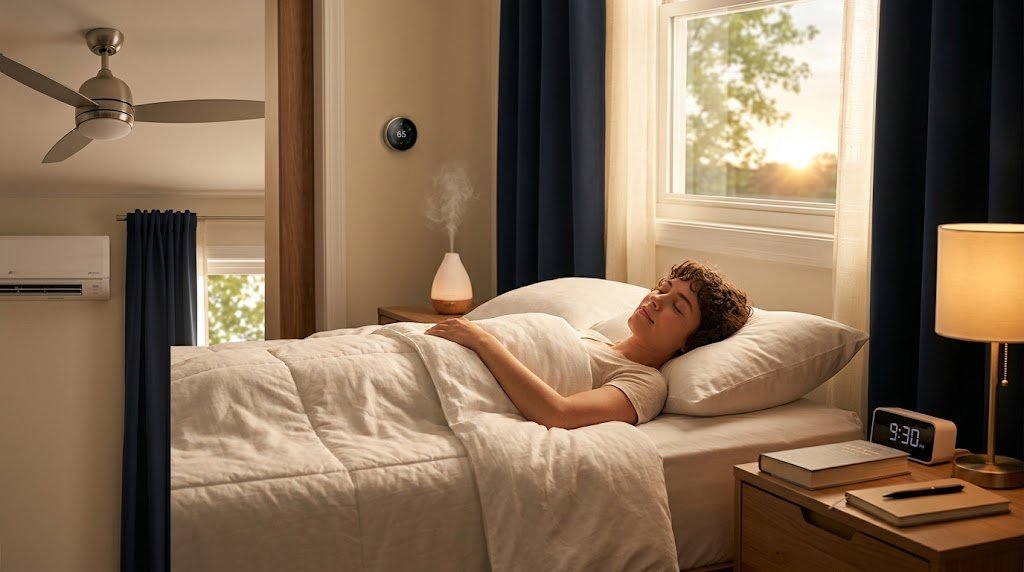
Modern life seems almost custom-designed to disrupt our natural sleep architecture. Between the relentless glow of digital screens, erratic work hours, high stress levels, and inconsistent daily schedules, millions of adults find themselves tossing and turning night after night. However, quality sleep is not a luxury or an optional luxury pass for the health-conscious; it is a foundational pillar of physical health, cognitive performance, emotional balance, and long-term vitality.
When you consistently experience inadequate or fragmented rest, the effects ripple through every system in your body. Immune function declines, metabolic health suffers, focus deteriorates, and your risk for chronic cardiovascular conditions climbs significantly. Fortunately, transforming the quality of your nightly rest does not require prescription medication or radical lifestyle overhauls overnight. By implementing evidence-based sleep hygiene techniques, resetting your physiological environment, and supporting your internal body clock, you can restore deep, restorative slumber.
Here are the top 10 science-backed strategies to help you stop struggling with insomnia, fall asleep faster, and wake up genuinely refreshed.
1. Establish a Rigorous, Consistent Sleep-Wake Schedule
Your body runs on a sophisticated internal 24-hour timing system known as the circadian rhythm. This central clock regulates everything from core body temperature and hormone production to cellular repair and digestive activity. When you go to bed and wake up at varying times—staying up late on Friday night and sleeping in on Sunday morning—you create a condition known as “social jet lag.”
To anchor your circadian rhythm:
- Pick a realistic wake-up time: Choose a time you can stick to seven days a week, regardless of whether it is a workday or the weekend.
- Maintain bedtime consistency: Go to sleep only when you feel sleepy, but target a window that allows for 7 to 9 hours of total sleep before your alarm sounds.
- Avoid weekend oversleeping: Extending your wake-up time by more than an hour on days off resets your biological clock, making Sunday night insomnia almost inevitable.
Consistency reinforces your body’s natural drive for sleep, allowing neurochemicals like adenosine to accumulate predictably throughout your waking hours so you feel naturally drowsy at night.
2. Harness Morning Sunlight to Reset Your Internal Clock
Light is the primary environmental cue (or zeitgeber) that dictates human circadian alignment. When daylight hits the specialized photosensitive retinal ganglion cells in your eyes, it sends a direct signal to the suprachiasmatic nucleus (SCN) in your brain. This signal halts the production of melatonin (the hormone that makes you sleepy) and initiates a timed release of cortisol, boosting alertness, mood, and daytime energy levels.
Getting bright, natural sunlight early in the day directly dictates how easily you will fall asleep 12 to 16 hours later:
- Step outside within 30 to 60 minutes of waking up.
- Spend at least 15 to 30 minutes in direct natural sunlight without wearing sunglasses (regular glasses or contacts are fine).
- If you wake up before sunrise or live in an area with minimal morning sunlight, consider using a 10,000-lux light therapy box to replicate early daylight.
3. Cool Down Your Sleeping Environment
One of the most overlooked components of restorative sleep is room temperature regulation. As your body prepares for sleep, your core body temperature naturally drops by about 1 to 2 degrees Fahrenheit. This cooling process is a physiological prerequisite for entering deep, slow-wave sleep. If your sleeping space is too warm, your body struggles to shed heat, leading to frequent micro-awakenings, night sweats, and lighter, less refreshing sleep.
Sleep experts universally agree that the ideal ambient room temperature for adult sleep ranges between 60 and 67 degrees Fahrenheit (15.5 to 19.4 degrees Celsius).
To optimize your sleep sanctuary’s microclimate:
- Maintain precise climate control: Ensure your home’s heating and cooling systems are running efficiently and accurately.
- Promote airflow: Use ceiling or oscillating fans to keep fresh air circulating throughout the space.
- Select breathable bedding: Choose sheets and sleepwear made from natural, moisture-wicking fibers like linen, bamboo, or crisp cotton rather than synthetic materials.
4. Eliminate Blue Light and Screen Exposure Before Bed
While bright light in the morning is essential for daytime vitality, light exposure in the late evening acts as a major disruptor to your body’s chemistry. Modern smartphones, tablets, laptops, and televisions emit concentrated amounts of short-wavelength blue light. This spectrum closely mimics mid-day sun, tricking your brain into thinking it is still daytime and suppressing the nocturnal release of melatonin.
Beyond the light spectrum, the content on screens—social media feeds, breaking news, intense video games, work emails—triggers psychological arousal and activates the sympathetic nervous system.
Implement a digital sunset strategy:
- Enforce a strict “screens off” boundary at least 60 minutes before your target sleep time.
- Keep electronic devices out of the bedroom entirely to remove the temptation of late-night scrolling.
- Switch ambient home lighting to warm, low-wattage lamps or dimmers during the evening hours.
5. Cut Off Caffeine and Alcohol Early
What you put into your body hours before bed plays a massive role in what happens once your head hits the pillow. Two common dietary staples—caffeine and alcohol—are responsible for a significant percentage of sleep disturbances.
The Caffeine Trap
Caffeine is an adenosine receptor antagonist. Adenosine is a compound that builds up in your brain throughout the day, creating “sleep pressure.” Caffeine blocks these receptors, tricking your brain into feeling alert even when physically exhausted. Caffeine has an average half-life of 5 to 6 hours and a quarter-life of up to 12 hours. That means a cup of coffee consumed at 3:00 PM can still leave 25% of its stimulant effects circulating in your brain at 3:00 AM. Establish a strict caffeine curfew, stopping all coffee, energy drinks, and caffeinated teas by 12:00 PM or 2:00 PM at the latest.
The Alcohol Illusion
While alcohol acts as a central nervous system depressant and may help you fall asleep faster, it severely damages overall sleep quality. As your liver metabolizes alcohol during the second half of the night, it causes a severe rebound effect: suppressing REM sleep, triggering frequent nighttime awakenings, elevating heart rate, and exacerbating sleep-disordered breathing or snoring. Avoid consuming alcoholic beverages within 3 to 4 hours of going to sleep.
6. Design a dedicated Wind-Down Routine
You cannot expect your mind and body to instantly transition from a state of high-stress productivity to peaceful, restorative sleep the moment you flip off the main light switch. Your nervous system requires a gradual ramp-down period to shift from sympathetic dominance (“fight or flight”) into parasympathetic dominance (“rest and digest”).
Dedicating 30 to 60 minutes every evening to a predictable wind-down sequence signals to your brain that it is safe to relax:
- Take a warm bath or shower: Heating your skin draws blood to the surface; when you step out of the warm water, your body rapidly dumps heat, helping kickstart the core temperature drop needed for sleep.
- Engage in low-stimulation activities: Read a physical book or magazine, practice gentle stretching, or listen to calming acoustic music.
- Perform a “brain dump”: Write down lingering worries, uncompleted tasks, or tomorrow’s to-do list in a physical journal to clear mental bandwidth and reduce night-time anxiety.
7. Optimize Your Physical Sleep Sanctuary
Your bedroom should serve a single primary purpose: rest. If your sleeping space doubles as a home office, entertainment room, or storage dump, your brain subconsciously associates the environment with stress, productivity, and wakefulness.
Create an optimal physical environment by tackling three key sensory inputs:
- Light: Install heavy blackout curtains or wear a contoured eye mask to block all external light pollution, including street lamps and early morning sun. Cover up LED indicator lights on electronics with tiny dark stickers.
- Sound: Eliminate intrusive ambient noises—such as traffic, neighborhood activity, or noisy HVAC systems—by using a white noise machine, a simple fan, or silicone earplugs.
- Comfort: Evaluate your mattress, pillows, and bedding. Mattresses generally lose structural integrity after 7 to 10 years, leading to pressure points and spinal misalignment that cause tossing, turning, and back pain.
8. Master Daytime Physical Activity (Timing is Everything)
Regular physical activity is one of the most effective, research-backed non-pharmacological methods for improving sleep efficiency and boosting deep slow-wave sleep. Exercise increases your body’s sleep drive, burns off stress hormones like cortisol and adrenaline, and regulates metabolic health.
However, the timing of your workouts matters significantly:
- Morning and afternoon exercise: Moderate to vigorous cardio or resistance training early in the day elevates your body temperature and heart rate, promoting daytime alertness and deeper sleep at night.
- Late evening workouts: High-intensity exercise performed within 2 to 3 hours of bedtime can backfire. Intense workouts spike your core body temperature, raise your resting heart rate, and stimulate adrenaline release—making it exceedingly difficult to wind down. Keep late-evening workouts limited to light yoga, gentle mobility work, or leisure walking.
9. Apply the 20-Minute Rule to End Sleep Anxiety
One of the most counterproductive habits people develop when suffering from insomnia is lying in bed awake for hours, watching the clock, and stressing over how little sleep they will get before their alarm rings. This behavior creates a classical conditioning response in your brain: instead of associating your bed with comfort and rest, your mind begins to associate the bed with frustration, anxiety, and wakefulness.
To break this negative psychological loop, utilize stimulus control therapy’s famous 20-Minute Rule:
- If you cannot fall asleep—or if you wake up in the middle of the night and cannot drift back off within roughly 20 minutes—get out of bed.
- Move to another dimly lit room.
- Do something quiet, calming, and non-stimulating: read a chapter of a book, practice deep breathing exercises, or listen to soft audiobooks.
- Return to bed only when your eyelids feel heavy and you are genuinely sleepy.
10. Upgrade Home Environmental Comfort and Climate Controls
While behavioral shifts are essential, the underlying physical infrastructure of your environment plays an undeniable role in maintaining uninterrupted sleep quality throughout the year. Poor indoor air quality, improper humidity levels, and fluctuating ambient conditions directly degrade your ability to stay asleep. Dry air causes nasal congestion and throat irritation, while high humidity prevents natural sweat evaporation, leaving you feeling sticky and uncomfortable.
Furthermore, an inconsistent environment that shifts in temperature will pull you out of deep sleep cycles repeatedly. Ensuring your space maintains ideal ambient conditions, quiet surroundings, and personalized wellness routines is a vital investment in your sleep hygiene. Utilizing dedicated personal growth and wellness resources to learn how to get better sleep helps you track your health routines, optimize your daily lifestyle habits, and build an environment tailored for uninterrupted rest every single night.
Summary of Key Takeaways
Achieving consistent, high-quality sleep is rarely about finding a single magic pill or quick fix. Instead, it is the cumulative result of aligning your daily routines with your human biology. By maintaining a strict wake schedule, seeking morning light, managing light and screen exposure at night, optimizing ambient room temperature, and keeping your home environment comfortable, you provide your body with all the signals it needs to enjoy deep, restorative sleep.
Start by choosing two or three techniques from this list to implement this week. As those become automatic habits, incorporate additional strategies to complete your personal sleep hygiene routine.
References
- National Sleep Foundation (2025). Sleep Habits and Tips to Not Be Tired. SleepFoundation.org.
- Centers for Disease Control and Prevention (2024). About Sleep: Tips for Better Sleep. U.S. Department of Health and Human Services.
- National Institute for Occupational Safety and Health (NIOSH). Improving Your Sleep and Alertness: Create a Good Sleep Environment. CDC.gov.
- Sleep Foundation (2026). What to Do When You Can’t Sleep: Expert-Backed Strategies. SleepFoundation.org.
- Johns Hopkins Medicine. Your Bedroom for Better Sleep: Environmental Modifications for Optimal Rest. HopkinsMedicine.org.


Leave a Reply