

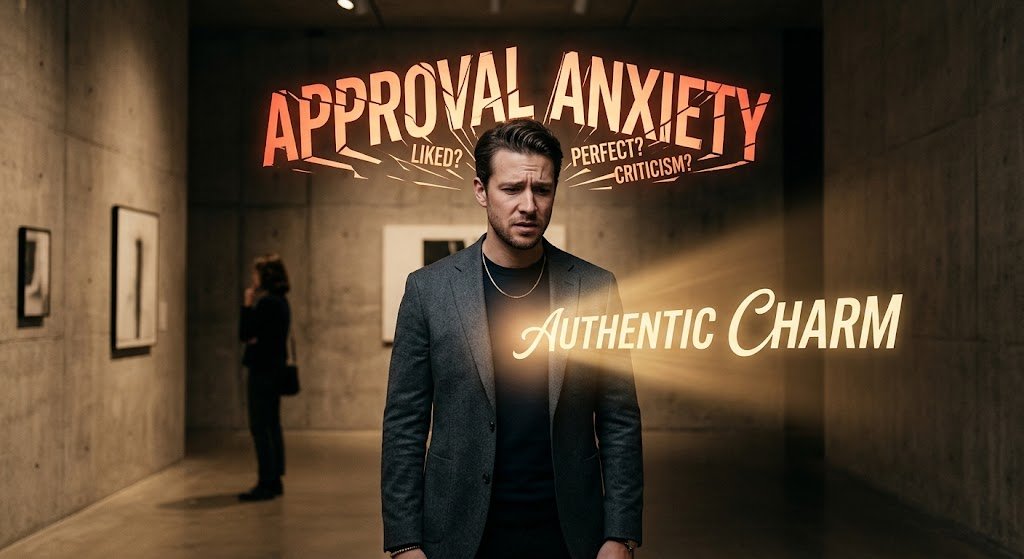
You spend hours curating your image, dressing sharply, and cultivating an aura of quiet authority. Yet, despite your polished appearance, social interactions feel uphill, networking events feel exhausting, and your natural charm feels muted. The issue isn’t your outfit, your personal brand, or your conversation topics—it is your internal need for validation.
When you enter a room desperate for acceptance, people pick up on it instantly. Psychological research shows that approval anxiety triggers micro-behaviors—over-explaining, tense body language, and fake agreement—that ruin your natural magnetism.
Here is how approval anxiety sabotages your charm, along with actionable mindset shifts to regain your authentic confidence.
What Is Approval Anxiety?
Approval anxiety is the constant, underlying fear of being judged, rejected, or disliked by others. It shifts your focus away from connecting with people and forces you into performance mode.
Instead of showing up as yourself, you constantly monitor how you are being received. This hyper-vigilance keeps your nervous system in a state of low-grade threat, making genuine warmth and effortless charm nearly impossible.
7 Ways Approval Anxiety Destroys Charm (And the Fixes)
1. You Over-Explain Yourself
When approval anxiety kicks in, simple answers turn into long justifications. You over-explain your decisions because you fear being misunderstood or criticized.
- The Charm Killer: Over-explaining signals insecurity and weakness.
- The Fix: Practice the “One-Sentence Rule.” State your thought cleanly, stop talking, and sit comfortably with the brief silence that follows.
2. You Agree With Everything
Nervous validation-seeking leads to passive agreement. You nod along to opinions you disagree with just to keep the peace and avoid friction.
- The Charm Killer: Agreeing with everyone makes you forgettable. Magnetism requires contrast and clear values.
- The Fix: Use polite disagreement anchors like, “That’s an interesting perspective, though I see it a bit differently.”
3. Your Body Language Becomes Rigid
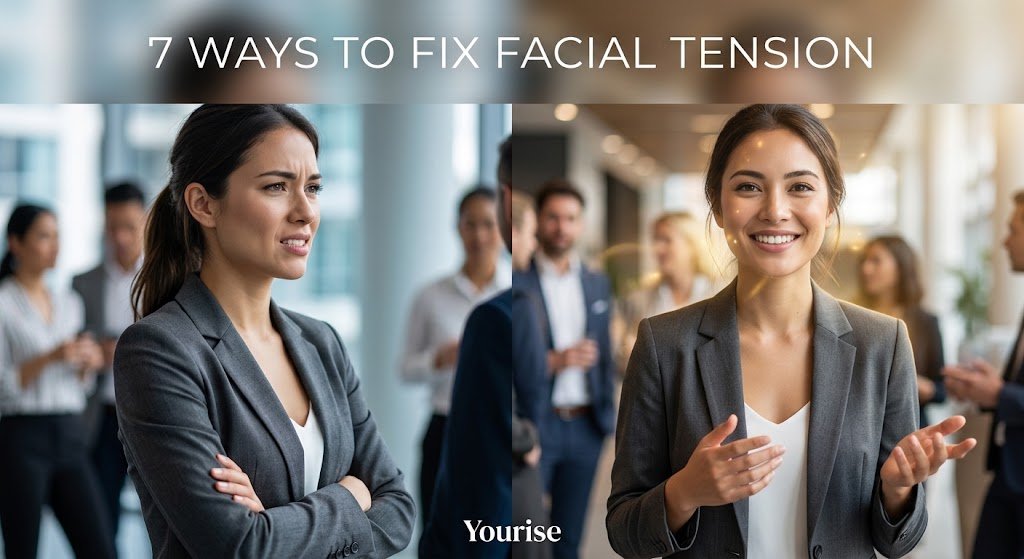
Your body registers approval anxiety long before your brain admits it. Fidgeting, forced smiling, avoiding eye contact, or crossing your arms are physical signs of internal tension.
- The Charm Killer: People subconsciously mirror your physical discomfort, making interactions feel stiff and unnatural.
- The Fix: Drop your shoulders, unclamp your jaw, and take three slow belly breaths before entering any social setting.
4. You Laugh Hyperactively
Laughing at jokes that aren’t funny or chuckling after every sentence you speak is a classic sign of nervous appeasement.
- The Charm Killer: It signals that you are seeking reassurance rather than sharing genuine enjoyment.
- The Fix: Reserve laughter for moments of actual humor. Controlled warmth is far more captivating than nervous laughter.
5. You Hijack Conversations to Prove Worth
When you feel insecure, you might compulsively share achievements, name-drop, or top someone else’s story to prove you belong.
- The Charm Killer: Self-validation masquerading as conversation turns people off immediately.
- The Fix: Shift from trying to be interesting to being interested. Ask insightful questions and let others shine.
6. You Second-Guess Every Interaction
Replaying conversations in your head late at night is a classic sign of high approval anxiety. You scrutinize every word, pause, and glance looking for evidence that you messed up.
- The Charm Killer: Post-event rumination builds social fatigue, making you dread future interactions.
- The Fix: Use the “Spotlight Rule.” Remember that people care far more about how you made them feel than about your minor verbal stumbles.
7. You Try to Be Everything to Everyone
Chameleon-like behavior occurs when you alter your personality depending on who you are talking to in order to win favor.
- The Charm Killer: Inconsistency erodes trust. People notice when your persona shifts across different rooms.
- The Fix: Define three core personal values and stick to them, regardless of who you are interacting with.
Quick Daily Blueprint to Reset Your Focus
- Morning: Remind yourself of your intrinsic worth before checking social media or emails.
- Midday Check-In: Unclench your jaw, drop your shoulders, and slow down your speaking cadence.
- Social Settings: Focus 80% of your attention on the person speaking rather than on your own internal feedback loop.
- Evening: Celebrate moments where you spoke authentically rather than focusing on whether you were liked.
Overcoming Approval Anxiety for Long-Term Presence
Unshakable presence does not mean you stop caring about people; it means you stop measuring your self-worth by their immediate reactions. When you conquer your internal insecurities and step into social settings with true confidence, your natural warmth and charisma emerge effortlessly.
If you want to dive deeper into cognitive tools and mindset habits for peak mental performance, explore resources on overcoming approval anxiety to rebuild your authentic presence from the inside out.
References & Scientific Notes
- Spotlight Effect in Social Perception: Gilovich, T., Medvec, V. H., & Savitsky, K. (2000). The spotlight effect in social judgment: An egocentric bias in estimates of the salience of one’s own actions and appearance. Journal of Personality and Social Psychology. (Explains why people notice our perceived mistakes far less than we think).
- Cognitive Restructuring & Reappraisal: Gross, J. J. (2002). Emotion regulation: Affective, cognitive, and social consequences. Psychophysiology. (Demonstrates how cognitive re-framing reduces nervous system arousal during social performance).
- Sociometer Theory of Self-Esteem: Leary, M. R. (2005). Sociometer theory and the pursuit of status and acceptance. Evolutionary and Neurobehavioral Approaches to Social Behavior. (Analyzes the evolutionary drives behind social validation seeking).
- Nonverbal Mirroring & Charm: Chartrand, T. L., & Bargh, J. A. (1999). The chameleon effect: The perception-behavior link and social interaction. Journal of Personality and Social Psychology. (Shows how underlying tension disrupts natural rapport and mirroring).
- Autonomic Nervous System Regulation: Porges, S. W. (2007). The Polyvagal Perspective. Biological Psychology. (Explains how calming physiological arousal directly influences facial expressions and vocal tone in social engagement).


Leave a Reply