

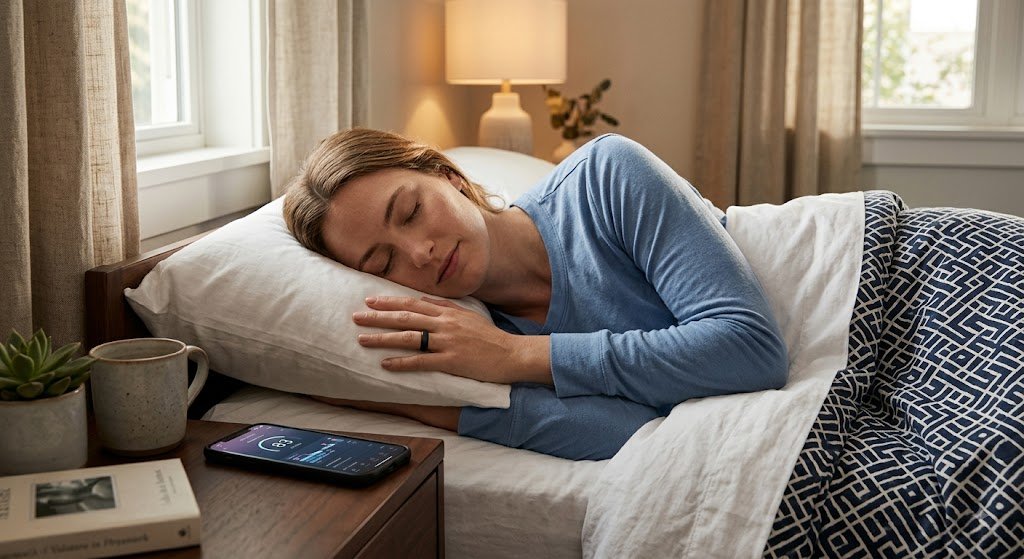
Do you ever wake up after sleeping for eight full hours, only to drag yourself out of bed feeling like you barely rested? You poured a second cup of coffee before noon, pushed through afternoon brain fog, and wondered why your body still feels so exhausted.
You are not alone. Millions of people struggle with chronic daytime fatigue, even when they think they are getting enough sleep. The problem usually is not the quantity of hours you spend in bed. The real issue is the quality of your sleep and how well your body recovers overnight.
This is where smart sleep technology comes into play. Among the tools available today, the Oura Ring (available here on Amazon) has become one of the most popular health devices. Instead of taking wild guesses about why you feel tired, this subtle smart ring tracks your body’s vital signs all night long.
Let’s break down how the Oura Ring works, how it measures real sleep recovery, and how you can use these insights to finally wake up with natural energy.
Why Getting Hours in Bed Isn’t the Same as Recovery
Before looking at how the technology works, it helps to clear up a common myth: time in bed does not equal actual sleep recovery.
When you sleep, your brain and body cycle through different stages: Light Sleep, Deep Sleep, and REM (Rapid Eye Movement) Sleep. Each stage plays a unique role in keeping you healthy and sharp:
- Deep Sleep: This is physical recovery time. Your body releases growth hormones, repairs muscles, strengthens your immune system, and cleans out metabolic waste from your brain.
- REM Sleep: This is mental recovery time. Your brain processes memories, regulates your emotions, and sparks creative problem-solving.
- Light Sleep: This serves as the transition state between waking life and deeper sleep stages.
If you spend eight hours in bed but your sleep is constantly interrupted by stress, late-night meals, alcohol, or a room that is too warm, you miss out on critical Deep and REM sleep. You wake up feeling exhausted because your body never reached the deep recovery stages it needed.
How the Oura Ring Measures Your Sleep Quality
Most fitness trackers sit on your wrist. While smartwatches can track movement, your wrist is not always the best place to measure subtle changes in blood flow.
The Oura Ring takes a different approach. It wears like a standard piece of jewelry on your finger, where arteries sit much closer to the surface of your skin. This positioning allows its tiny infrared LED sensors to gather exceptionally clean data on your circulatory system and body temperature.
While you rest, the Oura Ring continuously tracks three major signals to measure your overnight recovery:
1. Heart Rate Variability (HRV)
Heart Rate Variability is one of the most reliable markers of physical stress and recovery. HRV measures the tiny, millisecond variations in time between each heart beat.
It might sound strange, but a higher HRV is actually a sign of good health. High variability means your autonomic nervous system is flexible, relaxed, and ready to handle stress. A low HRV indicates that your body is stuck in a “fight-or-flight” stress mode. By tracking your HRV throughout the night, the Oura Ring shows whether your nervous system fully relaxed or spent the night fighting off hidden physical stress.
2. Resting Heart Rate (RHR) and Timing
Your resting heart rate is the number of times your heart beats per minute while you are completely still. A lower overnight resting heart rate generally reflects better cardiovascular fitness and proper recovery.
However, the Oura Ring tracks when your heart rate hits its lowest point during the night, not just the number itself. In a healthy sleep cycle, your heart rate drops early in the night, giving your heart a long stretch of quiet rest. If your heart rate stays high until right before your morning alarm, your body spent most of the night processing a late dinner, fighting off a bug, or dealing with lingering anxiety.
3. Body Temperature Variations
Your body’s core temperature naturally drops at night to help initiate deep sleep. The Oura Ring measures tiny shifts in your skin temperature—down to fractions of a degree.
If your temperature rises above your normal baseline, it can signal that you are getting sick, dealing with hormonal shifts, or sleeping in an overheated bedroom. Spotting these temperature variations early gives you a heads-up that your body needs extra rest before you even start showing symptoms.
Turning Sleep Data Into Daily Action
Data is only useful if it helps you make better decisions. Gazing at a chart of sleep stages won’t magically give you more energy unless you change the habits causing your fatigue.
The Oura Ring simplifies complex biometrics into a single daily score: The Readiness Score.
Ranges from 0 to 100 tell you exactly how prepared your body is for the day ahead:
- High Readiness (85+): Your HRV is high, your heart rate dropped early, and you got plenty of restful sleep. This is your green light to push hard at the gym, tackle tough projects, or take on extra challenges.
- Low Readiness (Below 70): Your nervous system is stressed, or your sleep was heavily disrupted. Your body is asking for a lighter workload, a walk outside instead of an intense workout, and an earlier bedtime.
By comparing your daily scores against your daily habits, you can start identifying the hidden “sleep stealers” in your lifestyle.
For example, many users discover that eating a heavy meal within three hours of bedtime drops their HRV dramatically. Others realize that a couple of glasses of wine destroy their REM sleep, or that keeping their bedroom two degrees cooler adds thirty full minutes of deep physical recovery.
How to Fix Your Recovery Cycle starting Tonight
Tracking your sleep with a smart device like the Oura Ring gives you incredible personal insight, but technology is only one part of the puzzle. You still need a solid foundation of healthy habits to help your body unwind.
If you are tired of waking up exhausted, start with these simple, proven strategies:
- Keep a Consistent Schedule: Going to bed and waking up within the same 30-minute window every day—even on weekends—keeps your internal circadian clock steady.
- Cool Down Your Space: Your body needs to drop its core temperature to enter deep sleep. Keep your bedroom cool, ideally between 65°F and 68°F.
- Limit Late-Night Screens: Blue light from phones and televisions tricks your brain into thinking it is still daytime, blocking the natural production of melatonin. Turn off bright screens at least one hour before bed.
- Watch the Evening Meals: Digesting heavy, fatty foods late at night forces your heart to work harder, delaying physical recovery while you sleep.
When lifestyle tweaks aren’t enough to restore your natural energy, targeted training programs can help retrain your brain and body for deeper relaxation. If you are looking to revitalize your daily energy levels and support long-term wellness, explore how YouRise.me offers tools and guidance to help you recover faster, reduce daily stress, and wake up feeling truly refreshed.
Final Thoughts
Feeling tired all the time should not be your normal baseline. Sleep is not just a passive break from your busy day—it is an active, vital process where your body rebuilds itself.
Smart devices like the Oura Ring take the mystery out of morning exhaustion. By measuring your Heart Rate Variability, temperature shifts, and resting heart rate, you get a clear map of what is happening under the hood. When you pair smart tracking tools with consistent daily habits, you can stop fighting constant fatigue and finally get the deep, restorative sleep your body deserves.
References & Further Reading
- National Heart, Lung, and Blood Institute (NHLBI): How Sleep Works – Sleep Stages and Circadian Rhythms. Highlights how deep and REM sleep stages support physical health, memory, and brain function.
- Harvard Health Publishing: Heart Rate Variability: A New Way to Track Stress. Explains the medical science behind HRV and its role in measuring nervous system recovery.
- Journal of Clinical Sleep Medicine: The Effects of Thermal Environment on Sleep Quality. Details how body temperature regulation impacts deep sleep duration and overnight wakefulness.
- Sleep Medicine Reviews: Wearable Tech and Biometric Monitoring in Sleep Research. Demonstrates how wearable sensors track skin temperature and pulse rates to analyze sleep patterns outside of a medical lab.
- National Institutes of Health (NIH): The Impact of Circadian Rhythm Disruption on Daytime Fatigue and Long-Term Health. Explores how inconsistent sleep schedules and night-time light exposure trigger chronic fatigue.


Leave a Reply