

We have all been sold a dangerous lie: the myth of the “hustle culture” grind. For years, the professional world has glorified the executive who survives on four hours of night-time rest, the engineer who pulls all-night coding sessions, and the entrepreneur who treats fatigue as a badge of courage. But modern neuroscience and workplace data have completely flipped this narrative on its head.
Sacrificing rest doesn’t accelerate your path to professional success; it systematically breaks down the exact biological infrastructure required to achieve it.
When you deprive yourself of adequate recovery, you are not working harder—you are just operating a heavily compromised version of your brain. The reality is that sleep is an active, highly coordinated neurological state designed to optimize cognitive capacity, emotional resilience, and physical stamina.
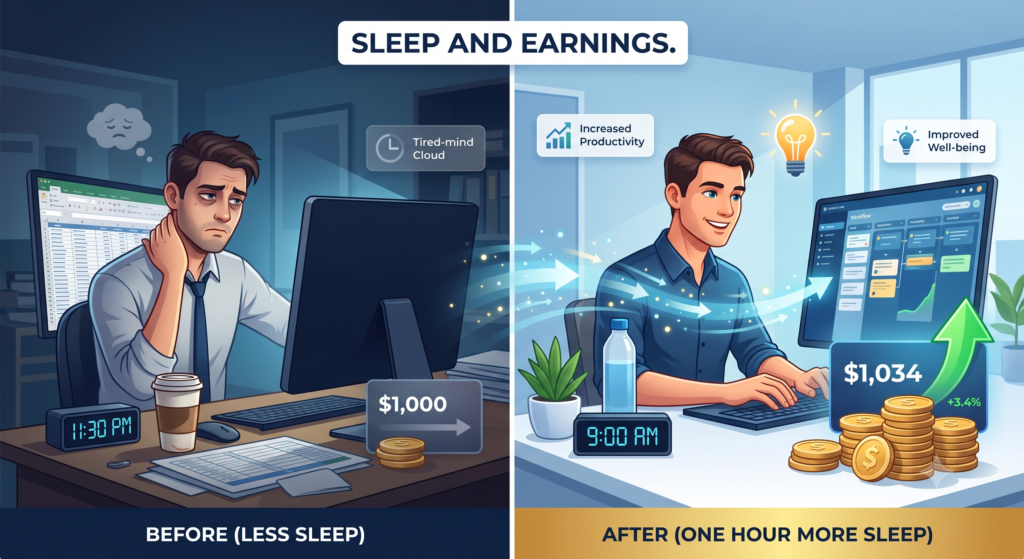
According to research published in the Journal of Health Economics (Gibson & Shrader, 2018), getting just one extra hour of sleep per week is linked to a 3.4% increase in weekly earnings. Surprisingly, those individuals did not work extra hours; rather, working hours actually decreased for those who slept more. That pay raise resulted entirely from improved mental well-being and the surge in productivity that comes with being better rested.
1. The Financial Return on Human Rest
While many professionals assume that working around the clock is the only way to climb the corporate ladder, the economic data tells a different story. Prioritizing recovery isn’t just good for your health; it has a direct, measurable impact on your earning potential.
When you optimize your sleep, you increase your day-to-day efficiency. You get more done in less time, freeing up energy to focus on high-value projects, strategic thinking, and creative problem-solving—the exact traits that catch the eye of leadership and command higher compensation.
2. The Neurobiology of a High-Performance Brain
To understand how high-quality rest elevates your daily output, we must look at what happens inside the prefrontal cortex—the command center of the brain responsible for advanced executive functions. This region manages everything from logical reasoning, complex problem-solving, and abstract thinking to self-control and long-term planning.
When you sleep, your brain initiates a highly specialized maintenance protocol. The glymphatic system—essentially the brain’s waste clearance mechanism—opens up, allowing cerebrospinal fluid to wash away metabolic debris accumulated during waking hours. Without this nightly flush, toxic waste products build up, leading to severe cognitive deceleration.
The impact of this neural buildup is immediate and measurable. Adequate sleep directly dictates an employee’s situational alertness and objective vigilance throughout the day (Pilcher & Morris, 2020). When an individual is well-rested, their neural pathways fire rapidly and predictably, dramatically lowering the risk of focus lapses.
In sharp contrast, a brain starved of rest experiences brief, involuntary periods of cognitive non-responsiveness known as microsleeps. While you might not notice yourself nodding off at your desk, these fractions of a second are responsible for thousands of missed details, email typos, and analytical miscalculations every single day.
Furthermore, information processing and working memory are deeply tethered to specific sleep architectures. During deep slow-wave sleep, the brain transfers newly acquired data from the temporary storage of the hippocampus to the permanent filing cabinet of the neocortex. If this cycle is shortened, your ability to learn new software, architecture, or critical metrics drops exponentially.
3. The Hidden Corporate Tax: Absenteeism and Presenteeism
The toll of poor sleep extends far beyond personal frustration; it functions as a multi-billion-dollar tax on the global corporate economy. Workplace health analytics consistently categorize the consequences of sleep deprivation into two major operational losses:
- Absenteeism: Missing work completely due to illness or exhaustion.
- Presenteeism: Showing up to work but functioning at a fraction of your actual capability.
Research indicates a powerful bidirectional relationship between sleep vulnerabilities and work conditions, proving that chronic sleep deficits trigger severe dips in objective productivity (Fietze et al., 2022).
Presenteeism is particularly insidious because it is largely invisible to project managers. An exhausted employee might sit at their desk for eight hours, but their cognitive processing speed is so profoundly delayed that simple operational tasks take twice as long to complete.
THE CASUALTY LOOP OF SLEEP DEPRIVATION
Inadequate Rest ➔ Slower Glymphatic Flush
  ➔ Toxic Waste Accumulation in Prefrontal Cortex
  ➔ Attentional Lapses & Declining Executive Function
  ➔ Severe Presenteeism & Hidden Productivity Loss
To put this into numbers, macroeconomic impact reviews show that individuals with insufficient rest patterns score significantly higher for presenteeism and experience a massive drop in general on-the-job effectiveness compared to their well-rested peers (Grandner, 2018). In the United States alone, sleep loss accounts for an estimated loss of more than 1.2 million working days annually. This directly translates to roughly $150 billion in indirect corporate costs stemming from operational errors, missed deadlines, and uncompleted assignments.
When employees try to compensate for a lack of sleep by logging more hours, they run directly into the law of diminishing returns. An extra three hours of late-night work completed in a state of exhaustion rarely equals the value generated by one hour of highly focused, deeply rested cognitive output the following morning.
4. Emotional Intelligence (EQ) and Leadership Dynamics
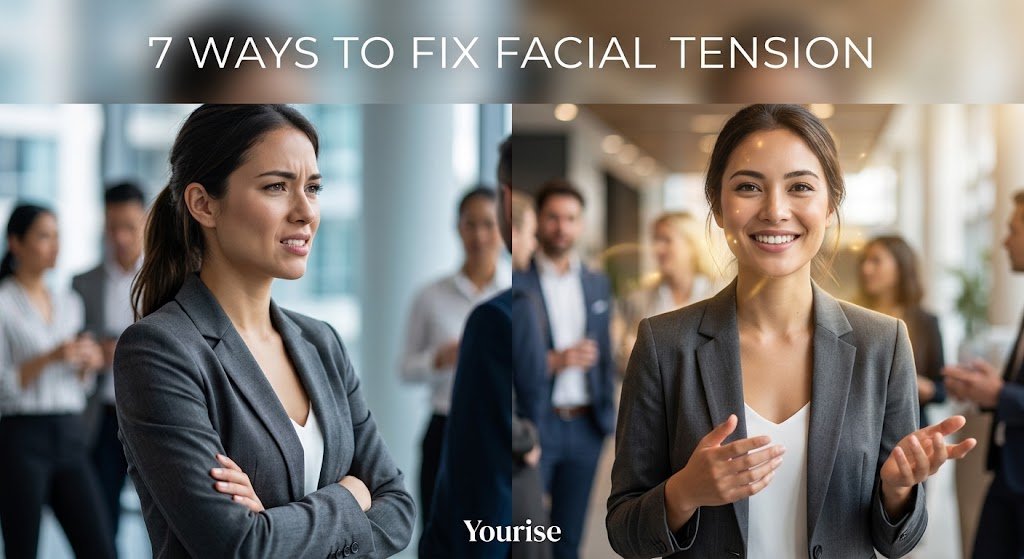
True professional excellence requires far more than raw analytical calculation. Success in the modern corporate matrix hinges on emotional intelligence (EQ)—the capacity to navigate complex interpersonal hierarchies, manage cross-functional communication, de-escalate customer conflicts, and project confident leadership.
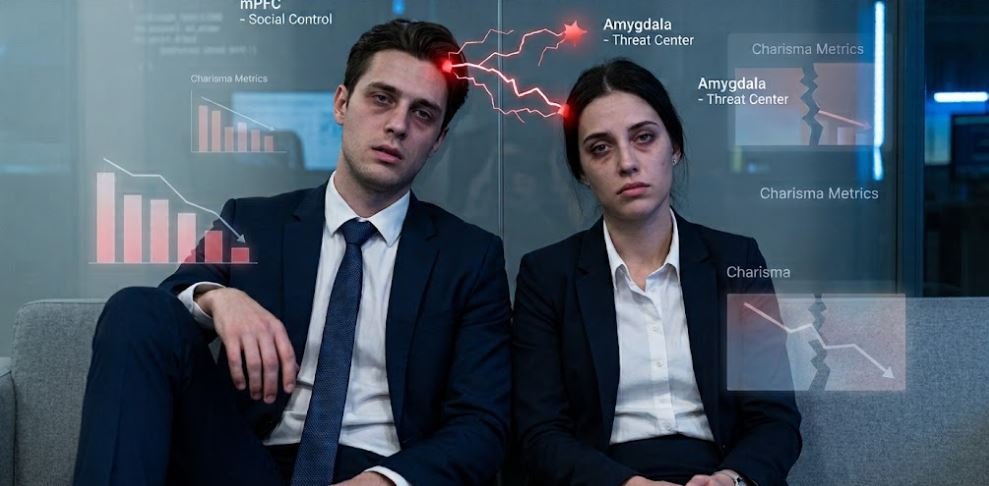
Unfortunately, EQ is the very first asset to erode when sleep quality plummets. When an individual experiences chronic sleep disturbances, their emotional regulation frameworks become destabilized. The amygdala—the brain’s emotional alarm system—becomes hyper-reactive to negative stimuli, while the prefrontal cortex loses its regulatory control over these primitive responses.
This structural disconnect directly damages workplace environments and internal team cultures. Studies tracking workforce metrics show that low sleep quality severely correlates with a decline in organizational citizenship behaviors and sparks a distinct rise in workplace friction (Peng et al., 2023). A sleep-deprived manager is statistically far more likely to display irritability, misinterpret neutral peer feedback as hostile, and struggle with basic impulse control during critical negotiations.
| Metric Impacted by Rest | Well-Rested Employee | Sleep-Deprived Employee |
| Cognitive Processing | High speed; rapid task-switching | Delayed responses; high friction |
| Risk Assessment | Balanced; focused on long-term value | Erratic; driven by short-term bias |
| Interpersonal Communication | Empathetic; collaborative; stable | Irritable; defensive; low empathy |
| Task Completion Accuracy | Low error rate; high quality | Frequent oversights; high re-work |
This dynamic creates a toxic workplace loop. An exhausted employee struggles to manage daily professional stressors, causing their job satisfaction to plunge. This compounding stress makes it even more difficult for them to fall asleep at night, intensifying the structural deficit and leaving them highly vulnerable to occupational burnout.
5. Safety Outcomes and the Prevention of Costly Errors
In many industrial, medical, and technical sectors, the consequence of a sleep lapse isn’t just a missed deadline—it is a catastrophic safety event. Sleep deprivation impairs physical coordination and visual tracking to a degree that closely mirrors alcohol intoxication.
Staying awake for 19 consecutive hours degrades cognitive and motor performance to a level identical to having a blood alcohol concentration (BAC) of 0.05%. Extend that wakefulness to 24 hours, and your impairment matches a BAC of 0.10%, which is well past the legal limit for driving in most regions.
Large-scale longitudinal evaluations across diverse corporate programs consistently find that individuals with high levels of sleep disturbance face a three-fold risk of heavily impaired work performance and are significantly more prone to triggering costly operational accidents and medical or technical errors (Hui & Grandner, 2015). Whether it is a software developer accidentally pushing a broken line of code that crashes a consumer-facing application, or a healthcare professional miscalculating a medication dosage during a grueling shift, sleep-deprived mistakes carry immense financial liabilities.
6. The High-Performance Sleep Blueprint
If you want to maximize your professional career trajectory, you must treat your sleep environment with the exact same strategic rigor that you bring to your quarterly financial goals. Sleep optimization is a structured, intentional skill that can be developed through specific biological habits:
- Protect the Final 60 Minutes: Avoid looking at laptops, tablets, or smartphones for at least one hour before bed. The short-wavelength blue light emitted by these screens suppresses the natural production of melatonin, tricks your master biological clock into thinking it is still daytime, and delays the onset of restorative deep sleep.
- Establish a Temperature Drop: Your body needs to drop its core temperature by roughly two degrees Fahrenheit to initiate and sustain a deep sleep state. Set your bedroom thermostat between 65 and 68 degrees Fahrenheit (18 degrees Celsius) to align with this natural circadian dip.
- Keep a Strict Wake-Up Window: Try to wake up at the exact same time every single day, including on weekends. This consistent anchor point stabilizes your internal circadian rhythm, ensuring that your body naturally enters deep recovery cycles at the appropriate time each evening.
Ultimately, high-performing professionals do not succeed in spite of sleeping; they succeed because they sleep. By prioritizing consistent, high-quality neurological recovery, you actively sharpen your focus, elevate your creative problem-solving capacity, and build deep emotional resilience. If you are ready to stop surviving and start thriving in your career, taking the time to focus on improving your sleep health is the single most valuable investment you can make for your professional future.
References
- Fietze, I., Rosenblum, L., Salanitro, M., Ibatov, A. D., Eliseeva, M. V., Penzel, T., Brand, D., & Westermayer, G. (2022). The Interplay Between Poor Sleep and Work-Related Health. Frontiers in Public Health, 10. https://doi.org/10.3389/fpubh.2022.866750
- Gibson, M., & Shrader, J. (2018). Time Use and Productivity: The Wage Returns to Sleep. Journal of Health Economics, 57, 238-251. https://doi.org/10.1016/j.jhealeco.2017.10.002
- Grandner, M. A. (2018). The Cost of Sleep Lost: Implications for Health, Performance, and the Bottom Line. American Journal of Health Promotion, 32(7), 1629–1634. https://doi.org/10.1177/0890117118790621a
- Hui, S. A., & Grandner, M. A. (2015). Trouble Sleeping Associated With Lower Work Performance and Greater Health Care Costs. Journal of Occupational & Environmental Medicine, 57(10), 1031–1038. https://doi.org/10.1097/jom.0000000000000534
- Peng, J., Zhang, J., Wang, B., He, Y., Lin, Q., Fang, P., & Wu, S. (2023). The relationship between sleep quality and occupational well-being in employees: The mediating role of occupational self-efficacy. Frontiers in Psychology, 14. https://doi.org/10.3389/fpsyg.2023.1071232
- Pilcher, J. J., & Morris, D. M. (2020). Sleep and Organizational Behavior: Implications for Workplace Productivity and Safety. Frontiers in Psychology, 11. https://doi.org/10.3389/fpsyg.2020.00045


Leave a Reply