


10 Essential Tips on How to Raise an Autistic Child: A Comprehensive Guide
Parenting is a journey filled with unique milestones and unexpected turns. When you are raising an autistic child, that journey often requires a different roadmap—one paved with radical patience, specialized communication, and a deep commitment to seeing the world through your child’s eyes.
Autism Spectrum Disorder (ASD) is a neurodevelopmental difference that affects how people perceive the world and interact with others. While the challenges are real, so are the rewards. By embracing your child’s unique neurobiology, you can create an environment where they don’t just “get by,” but truly thrive.
Here are 10 foundational tips for navigating the beautiful, complex world of raising an autistic child.
1. Educate Yourself Beyond the Diagnosis
The moment your child receives a diagnosis, you are flooded with medical jargon and clinical assessments. However, understanding an autistic child requires looking past the “deficits” listed in a clinical report.
- Learn the Language: Understand terms like sensory processing, neurodiversity, and stimming.
- Follow Autistic Voices: Some of the best advice comes from autistic adults who can explain what certain behaviors feel like from the inside.
- Stay Updated: Science is constantly evolving. Stay informed about the latest evidence-based therapies and educational strategies.
2. Focus on the Individual, Not the Label
Autism is a spectrum, which means “if you’ve met one person with autism, you’ve met one person with autism.” Your autistic child has a unique personality, set of interests, and temperament that exists independently of their diagnosis.
Avoid comparing your child’s progress to neurotypical peers or even other children on the spectrum. Celebrate their specific wins, whether it’s making eye contact, mastering a new skill, or simply navigating a crowded room without a meltdown.
3. Prioritize Routine and Predictability
For many children on the spectrum, the world feels chaotic and unpredictable. Establishing a rock-solid routine provides a “safety net” that reduces anxiety.
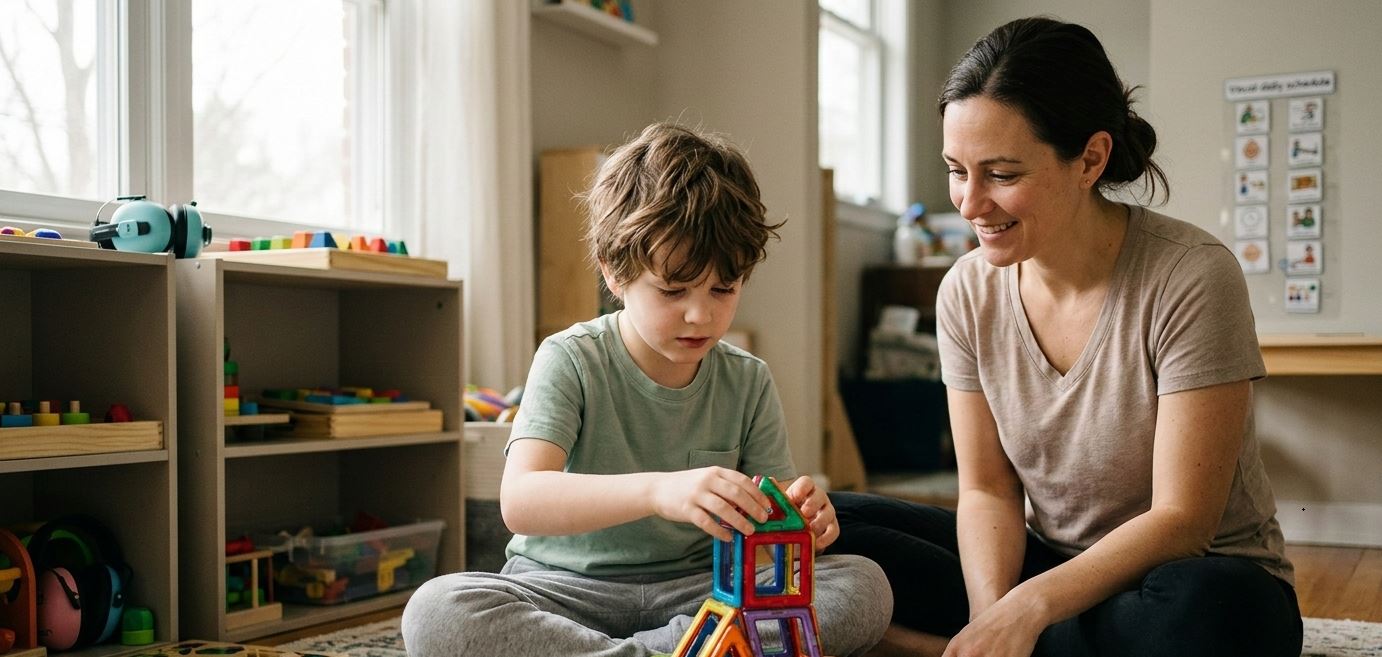
- Visual Schedules: Use icons or pictures to show the sequence of the day.
- Transition Warnings: Give a 5-minute and 1-minute warning before switching activities.
- Consistency is Key: Try to keep mealtimes, bedtimes, and school preparations the same every day.
4. Create a Sensory-Friendly Home
An autistic child often experiences sensory input differently. Sounds that seem quiet to you might feel like a jet engine to them; the texture of a shirt tag might feel like sandpaper.
Identifying Triggers
Pay attention to what causes distress. Is it the flickering of fluorescent lights? The hum of the refrigerator? Once you identify these, you can modify the environment:
- Quiet Zones: Create a “calm down corner” with soft pillows and dim lighting.
- Sensory Tools: Provide noise-canceling headphones, weighted blankets, or fidget toys.
- Clothing Choices: Opt for seamless socks and tagless shirts to prevent tactile discomfort.
5. Master the Art of Non-Verbal Communication
Communication isn’t just about spoken words. Many autistic children struggle with verbal processing but excel in other areas.
- Observe Behavior: Behavior is communication. A meltdown is often a sign of sensory overload or an unmet need that the child cannot express.
- Use Visual Aids: Augmented and Alternative Communication (AAC) devices or simple picture cards can bridge the gap when words are too difficult to find.
- Be Direct: Avoid sarcasm, idioms, or vague instructions. Instead of saying “Clean up your mess,” try “Please put the blue blocks in the plastic bin.”
6. Build a “Village” of Professionals
Raising an autistic child is not a solo mission. You need a multidisciplinary team to support your child’s development. This team may include:
| Professional | Role |
| Pediatrician | Monitors overall health and developmental milestones. |
| Occupational Therapist (OT) | Focuses on sensory integration and fine motor skills. |
| Speech-Language Pathologist (SLP) | Helps with both verbal communication and social cues. |
| Behavioral Analyst | Works on positive reinforcement and functional life skills. |
7. Lean Into Their “Special Interests”
Many autistic children develop intense, focused interests in specific topics—be it trains, dinosaurs, weather patterns, or space. Rather than trying to “diversify” their interests to fit social norms, lean into them.
These interests are often a source of joy and regulation for the child. Use them as a bridge for learning. If your child loves space, use planets to teach math or read books about astronauts to improve literacy.
8. Advocate Fiercely in the School System
Your child is entitled to a “Free and Appropriate Public Education” (FAPE). Navigating the world of Individualized Education Programs (IEPs) or 504 Plans can be daunting, but you are your child’s most important advocate.
- Know Your Rights: Research the laws in your area regarding special education.
- Collaborate: View teachers as partners, but don’t be afraid to speak up if a goal isn’t being met or if your child’s needs are being overlooked.
- Focus on Inclusion: Ensure your child has opportunities to interact with peers in a way that is supportive and safe.
9. Practice “Radical Acceptance”
There is a common grieving process parents go through when they realize their child’s life will look different than they imagined. However, the goal of raising an autistic child isn’t to “fix” them or make them “less autistic.”
Radical acceptance means loving your child exactly as they are right now. When you stop focusing on making them appear “normal,” you open up space to appreciate their unique perspective, their honesty, and their incredible way of seeing details that others miss.
10. Don’t Forget Self-Care (The Oxygen Mask Rule)
You cannot pour from an empty cup. The physical and emotional demands of raising an autistic child can lead to caregiver burnout.
- Find Support Groups: Connecting with other parents of autistic children can provide a sense of community and shared understanding.
- Respite Care: Don’t feel guilty about asking for help or hiring a trained caregiver so you can take a break.
- Maintain Your Identity: Ensure you have hobbies and social connections outside of your role as a parent.
Conclusion
Raising an autistic child is a marathon, not a sprint. It requires you to be a student, a therapist, an advocate, and—most importantly—a parent. By focusing on structure, sensory needs, and clear communication, you provide the foundation your child needs to navigate a world that wasn’t necessarily built for them.
Remember, the goal isn’t to change your child to fit the world; it’s to change the world’s understanding of your child while giving them the tools to be their best self.



Leave a Reply