
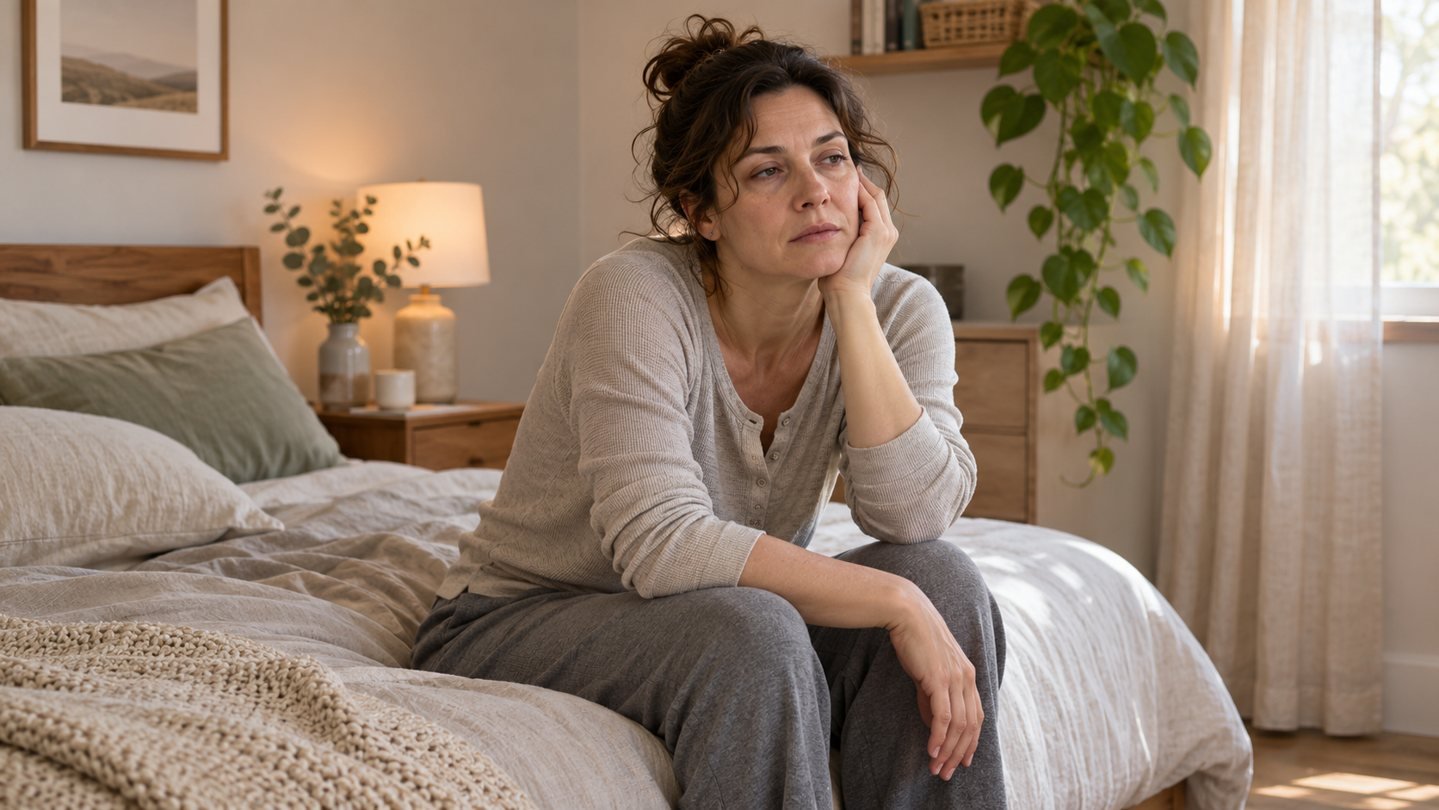
You went to bed on time, but you wake up with a headache and a dry mouth. By lunch, you’re fighting to keep your eyes open. If that keeps happening, it’s worth asking why. Obstructive sleep apnea is one possible cause, even if you sleep alone and have no idea whether you snore. Some clues show up first thing in the morning. Others become obvious when you try to get through an ordinary day (National Heart, Lung, and Blood Institute [NHLBI], 2025b).
What happens when you have sleep apnea?
With obstructive sleep apnea, the airway in your throat repeatedly narrows or closes during sleep. Your breathing slows or briefly stops. These episodes can lower oxygen levels and interrupt your sleep, sometimes without you remembering that you woke up. You may spend eight hours in bed and still feel unrefreshed. A sleep study can help show whether breathing interruptions are part of the problem (Kapur et al., 2017; NHLBI, 2025a).
Seven sleep apnea signs beyond snoring
- Morning headaches. You often wake with a headache before you’ve even gotten out of bed. Tell your provider how many mornings a week it happens and how long it lasts.
- A dry mouth when you wake up. You regularly reach for water as soon as the alarm goes off. Take note if it happens alongside headaches or daytime sleepiness.
- Daytime sleepiness. You keep nodding off while watching TV, reading, or sitting through a meeting, even after spending enough time in bed.
- Trouble concentrating. You lose track of conversations, reread the same paragraph, or have trouble staying focused on routine tasks at work or school.
- Repeated bathroom trips at night. You get up several times to urinate. If you already keep a sleep diary, write down how often this breaks up your night.
- Waking up gasping. You suddenly wake feeling like you need to catch your breath. Mention it to your provider, especially if it happens repeatedly.
- Breathing pauses someone else notices. A partner or family member tells you that your breathing went quiet, then restarted with a gasp. Their description can be useful because you may remember sleeping straight through it (NHLBI, 2025b).
These signs can have several causes. You can give your provider a clearer picture by describing which ones happen together. For example, “I wake with a headache three mornings a week, and I’ve started dozing off during meetings” tells them more than “I’m always tired” (NHLBI, 2025a, 2025b).
If you sleep alone, start with what you can observe. Write down when you went to bed, when you woke up, and how alert you felt the next day. If you woke up gasping or got out of bed several times, make a quick note. Bring whatever you’ve recorded to your appointment. If you have a hard time staying awake or someone has witnessed breathing pauses, contact your provider without waiting to fill out the diary (NHLBI, 2025a, 2025b).
When should you ask for a sleep study?
Bring it up if you frequently feel sleepy despite getting enough time in bed, wake up gasping, or learn that someone has seen you stop breathing during sleep. If you feel like you might fall asleep while driving, pull over somewhere safe and arrange another ride. Tell your provider about the episode (Kapur et al., 2017; NHLBI, 2025a, 2025b).
Some adults can take a clinician-ordered sleep apnea test at home. Others need a more detailed overnight study at a sleep center. If the home test result is negative or unclear, or if the test didn’t collect enough usable data, the American Academy of Sleep Medicine recommends following up with an in-lab study. Ask what your results mean and what the next step is if you still have symptoms (Kapur et al., 2017).
What helps with sleep apnea?
The right approach depends on how often your breathing is interrupted, what happens to your oxygen levels, and your overall health. Here are options you may discuss after a sleep evaluation (NHLBI, 2025a, 2025c).
Lifestyle changes you can discuss with your provider
Try side sleeping if your apnea is worse on your back. Some people have more breathing interruptions when they sleep face up. If your test shows that pattern, your provider may recommend side sleeping or a device that helps you stay off your back. A body pillow may make the position more comfortable.
Limit alcohol, especially near bedtime. Alcohol can relax muscles in the throat and make it easier for the airway to narrow. If you regularly drink in the evening, tell your provider how much and when.
Stay active and discuss weight if it applies to you. Regular physical activity and weight management can be part of a treatment plan. If weight loss is recommended, ask how to work on it alongside your current treatment and when to reassess your symptoms (NHLBI, 2025c).
Can mouth and throat exercises help?
A program called myofunctional therapy uses repeated movements of the tongue, lips, and throat. For example, a therapist might teach you to press your tongue against the roof of your mouth or practice controlled tongue movements. A Cochrane review found that these exercises may improve daytime sleepiness in adults. Evidence that they reduce breathing interruptions was less certain. If you’re interested, ask whether guided exercises could complement your care. Continue any prescribed treatment while you try them (Rueda et al., 2020).
CPAP, oral appliances, and other medical options
CPAP uses a mask to deliver gentle air pressure that keeps your airway open while you sleep. If the mask leaks, feels uncomfortable, or dries out your nose, tell your care team. They can help you try a different fit or adjust the equipment.
A custom oral appliance fits in your mouth and holds your lower jaw forward while you sleep. It may be an option for some people, including those who have trouble using CPAP. Ask who will fit it and how your provider will check that it’s helping.
Other treatments may include surgery or an implanted device that stimulates a nerve to help keep the airway open. A sleep specialist can explain when either option makes sense based on your test results and medical history (NHLBI, 2025c).
If you’re unsure how to start the conversation, bring one concrete example to your appointment. “I wake up gasping about twice a week, and I’m exhausted by noon. Could a sleep study help explain what’s going on?”
References
Kapur, V. K., Auckley, D. H., Chowdhuri, S., Kuhlmann, D. C., Mehra, R., Ramar, K., & Harrod, C. G. (2017). Clinical practice guideline for diagnostic testing for adult obstructive sleep apnea: An American Academy of Sleep Medicine clinical practice guideline. Journal of Clinical Sleep Medicine, 13(3), 479–504. https://doi.org/10.5664/jcsm.6506
National Heart, Lung, and Blood Institute. (2025a, January 9). Sleep apnea diagnosis. https://www.nhlbi.nih.gov/health/sleep-apnea/diagnosis
National Heart, Lung, and Blood Institute. (2025b, January 9). Sleep apnea symptoms. https://www.nhlbi.nih.gov/health/sleep-apnea/symptoms
National Heart, Lung, and Blood Institute. (2025c, January 9). Sleep apnea treatment. https://www.nhlbi.nih.gov/health/sleep-apnea/treatment
Rueda, J.-R., Mugueta-Aguinaga, I., Vilaró, J., & Rueda-Etxebarria, M. (2020). Myofunctional therapy (oropharyngeal exercises) for obstructive sleep apnoea. Cochrane Database of Systematic Reviews, 2020(11), Article CD013449. https://doi.org/10.1002/14651858.CD013449.pub2




Leave a Reply