

In our modern, hyper-connected world, it is almost impossible to escape the glow of digital screens. From the moment we wake up and check our smartphones to the late-night hours spent catching up on work or streaming our favorite shows, screens dominate our daily routines. While this technological evolution has brought unprecedented convenience and entertainment, it has also introduced a stealthy disrupter to our biological systems: artificial blue light.
For decades, scientists have warned about the general consequences of excessive screen time. However, recent breakthroughs in chronobiology have isolated a primary biochemical culprit behind our collective exhaustion. The blue light emitted by computers, phones, tablets, and even energy-efficient LED lighting directly alters the production of melatonin—the essential hormone responsible for regulating our sleep-wake cycles (West et al., 2011).
To truly protect your long-term health, it is vital to understand the profound ripple effects that melatonin suppression has on the human body, particularly in relation to your sleep health.
Understanding Blue Light and the Circadian Rhythm
To understand why a smartphone screen can disrupt your entire body, you first need to understand the mechanics of natural light. Light is composed of electromagnetic radiation spanning various wavelengths. The visible light spectrum ranges from red (long wavelengths, lower energy) to blue (short wavelengths, higher energy).
During the day, natural blue light from the sun is incredibly beneficial. It stimulates a specialized group of photoreceptors in our eyes called intrinsically photosensitive retinal ganglion cells (ipRGCs). These cells contain a light-sensitive photopigment called melanopsin, which is highly sensitive to blue light wavelengths typically between 460 and 480 nanometers (Luna-Rangel, n.d.).
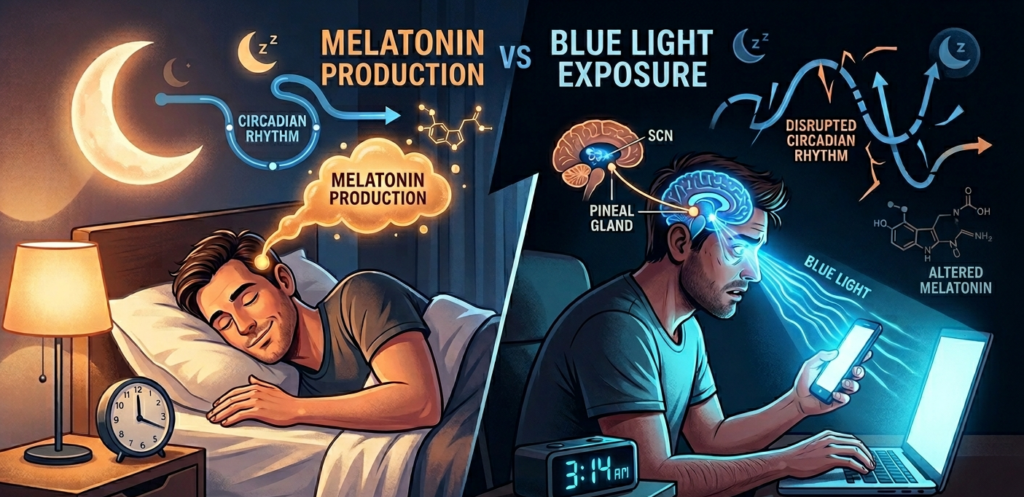
When these cells detect blue light, they send a direct signal to the suprachiasmatic nucleus (SCN)—the master circadian clock located in the brain’s hypothalamus. The SCN interprets this signal as a sign that it is daytime, triggering the release of cortisol to keep us alert, focused, and energized.
The trouble arises when we mimic daylight long after the sun has set. When we stare at screens at night, our ipRGCs continue to signal the SCN that it is daytime. The master clock, tricked by this artificial sun, fails to signal the pineal gland to begin synthesizing and releasing melatonin (Zhong, n.d.).
The Melatonin Mechanism: More Than Just a Sleep Hormone
Melatonin is often casually referred to as the “sleep hormone,” but this description downplays its extensive biological importance. Melatonin acts as the body’s chief chronobiotic agent—a biological timekeeper. It does not act as a sedative in the traditional pharmaceutical sense; rather, it acts as a chemical signal to the body that darkness has fallen, preparing every organ and cell for rest, repair, and rejuvenation.
When blue light alters and suppresses melatonin production, it does not merely keep you awake for an extra hour; it throws your entire cellular clock out of sync. Because melatonin receptors are distributed throughout almost every major system in the human body—including the brain, cardiovascular system, immune system, and gastrointestinal tract—the suppression of this single hormone initiates a cascade of negative physiological events.
The Profound Effects of Melatonin Suppression on Sleep Health
The most immediate and severe consequences of screen-induced blue light exposure manifest in our sleep quality and architecture. Here is exactly how altered melatonin production ravages your sleep health:
1. Prolonged Sleep Onset Latency
Sleep onset latency is the technical term for how long it takes you to fall asleep after turning off the lights. Under normal conditions, melatonin levels begin to rise significantly about two hours before your typical bedtime. This shift lowers your core body temperature, reduces blood pressure, and induces a state of calm relaxation. When you browse social media or work on a laptop in bed, the blue light delays this natural rise. As a result, you lay awake tossing and turning, unable to quiet your mind because your body biochemically believes it is still the middle of the afternoon.
2. Reduction in Deep and REM Sleep Stages
A healthy night of sleep consists of cycling through distinct stages: light sleep, deep slow-wave sleep (NREM), and Rapid Eye Movement (REM) sleep. Deep sleep is essential for physical recovery, muscle tissue repair, and immune regulation, while REM sleep is critical for emotional processing, memory consolidation, and cognitive function.
Studies show that individuals who use blue-light-emitting screens right before bed experience significantly reduced durations of both deep and REM sleep (Chang, n.d.). Because their melatonin surge is blunted and delayed, their sleep architecture becomes fragmented. Even if they manage to sleep for eight hours, they wake up feeling unrefreshed because their brains were deprived of the deepest, most restorative stages of rest.
3. Fragmentation of Sleep and Nighttime Awakenings
Melatonin is not only responsible for helping you fall asleep; it is also crucial for maintaining sleep throughout the night. A robust, steady release of melatonin ensures that you remain asleep during the early morning hours when ambient noises or minor environmental changes might otherwise wake you. When blue light destabilizes melatonin synthesis, your sleep becomes highly fragmented, leading to frequent micro-awakenings that disrupt your overall sleep continuity (Haarika, n.d.).
4. Phase Delay of the Circadian Rhythm
Consistent nighttime exposure to blue light can lead to a condition known as delayed sleep phase syndrome. By constantly pushing back the time your body produces melatonin, you effectively shift your entire internal clock forward. Eventually, your body adapts to this delayed schedule, making it impossible to fall asleep before 2:00 or 3:00 AM. This becomes a severe issue when societal obligations, such as school or work, require you to wake up early, resulting in chronic, cumulative sleep deprivation.
The Systemic Effects of Altered Melatonin on the Human Body
The damage caused by screen-induced melatonin suppression extends far beyond the bedroom. Because melatonin is a powerful antioxidant and systemic regulator, its depletion wreaks havoc on your overall health.
Cardiovascular Strain
During healthy, deep sleep, the body undergoes a process called “dipping,” where blood pressure and heart rate naturally drop by 10% to 20%. This resting period reduces stress on the arterial walls and gives the heart muscle a break. When blue light suppresses melatonin and disrupts deep sleep, this dipping phenomenon fails to occur. Chronic lack of nighttime melatonin is associated with systemic inflammation, elevated daytime blood pressure, and an increased long-term risk of developing cardiovascular disease, hypertension, and stroke.
Metabolic Disruption and Weight Gain
Melatonin plays a vital role in regulating metabolic homeostasis. It influences how our bodies secrete and respond to insulin, the hormone responsible for managing blood sugar levels. When melatonin production is blunted by late-night screen use, insulin sensitivity drops significantly the following day.
Furthermore, sleep deprivation alters the balance of appetite-regulating hormones: it suppresses leptin (the hormone that signals fullness) and elevates ghrelin (the hormone that triggers hunger). This hormonal imbalance leads to intense cravings for high-calorie, sugary foods, dramatically increasing the risk of obesity, insulin resistance, and Type 2 diabetes.
Weakened Immune Defense
While you sleep, your immune system releases proteins called cytokines, some of which help fight infections and inflammation. Melatonin itself acts as an immunomodulator and a potent free-radical scavenger, neutralizing cellular damage throughout the body. When blue light alters your melatonin output, your body produces fewer protective cytokines and loses a layer of antioxidant defense. This leaves you far more susceptible to common viral illnesses like colds and influenza, while slowing down your body’s natural healing and recovery processes.
Cognitive Decline and Mental Health Vulnerability
The brain relies on deep, melatonin-supported sleep to activate the glymphatic system—a specialized waste clearance mechanism that flushes out toxic cellular byproducts, including amyloid-beta plaques, which are linked to neurodegenerative conditions like Alzheimer’s disease (Green et al., 2017). Short-term melatonin deficiency leads to brain fog, poor focus, memory lapses, and impaired decision-making.
Over time, the emotional fragmentation caused by lack of REM sleep severely impacts mental well-being. Chronic suppression of melatonin and the resulting sleep disruptions are strongly linked to an increased risk of developing clinical depression, generalized anxiety disorder, and heightened emotional reactivity.
How to Protect Your Melatonin and Reclaim Your Sleep
Fortunately, you do not have to abandon modern technology completely to preserve your health. By implementing a few strategic habits, you can safeguard your body’s melatonin production and restore your natural circadian rhythm.
- Establish a Digital Sunset: The single most effective step you can take is to implement a strict “digital sunset” by turning off all smartphones, computers, and tablets at least 60 to 90 minutes before your intended bedtime. Swap screen time for reading a physical book, journaling, or practicing relaxation exercises.
- Utilize Blue Light Blocking Software and Glasses: If working late is unavoidable, utilize built-in software like “Night Shift” on Apple devices or “Night Light” on Windows to shift your screen’s display toward warmer, amber tones. For added protection, consider wearing high-quality blue light blocking glasses designed specifically to filter out wavelengths below 500 nanometers.
- Optimize Your Lighting Environment: Replace harsh, bright white LED or fluorescent bulbs in your bedroom and living areas with dim, warm-toned lighting. This change signals to your brain that evening has arrived, encouraging natural melatonin synthesis.
Prioritizing your nighttime environment is an essential pillar of long-term wellness. If you are eager to discover more scientifically backed strategies, expert advice, and practical guides to optimizing your nightly rest, explore the comprehensive resources available on sleep health to transform your habits and revitalize your body from the inside out.
Conclusion
The blue light emitted by our ubiquitous screens is far more than a minor eye strain or a passing distraction; it is a profound biological disruptor. By directly altering melatonin production, artificial blue light desynchronizes our internal master clock, compromising our sleep architecture and sparking systemic damage that touches our hearts, metabolisms, immune systems, and minds.
Protecting your body in the digital age requires conscious boundaries. By understanding the biochemistry of light and taking proactive steps to limit evening screen exposure, you can restore your body’s natural melatonin production, unlock deep, restorative sleep, and secure a healthier, more vibrant future.
References
Chang, A. M. (n.d.). Evening use of light-emitting eReaders negatively affects sleep, circadian timing, and next-morning alertness. PNAS. Cited by: 2246
Green, A., Cohen-Zion, M., Haim, A., & Dagan, Y. (2017). Evening light exposure to computer screens disrupts human sleep, biological rhythms, and attention abilities. Chronobiology International, 34(6), 855-865. https://doi.org/10.1080/07420528.2017.1324878 Cited by: 255
Haarika, V. (n.d.). The Impact of Screen Time on Sleep Patterns in School-Aged Children: A Cross-Sectional Analysis. PMC. Cited by: 4
Luna-Rangel, F. A. (n.d.). Efficacy of blue-light blocking glasses on actigraphic sleep outcomes: a systematic review and meta-analysis of randomized controlled crossover trials. PMC. Cited by: 7
West, K. E., Jablonski, M. R., Warfield, B., Cecil, K. S., James, M., Ayers, M. A., Maida, J., Bowen, C., Sliney, D. H., Rollag, M. D., Hanifin, J. P., & Brainard, G. C. (2011). Blue light from light-emitting diodes elicits a dose-dependent suppression of melatonin in humans. Journal of Applied Physiology, 110(3), 619-626. https://doi.org/10.1152/japplphysiol.01413.2009 Cited by: 497
Zhong, C. (n.d.). Electronic Screen Use and Sleep Duration and Timing in Adults. PMC. Cited by: 55


Leave a Reply