

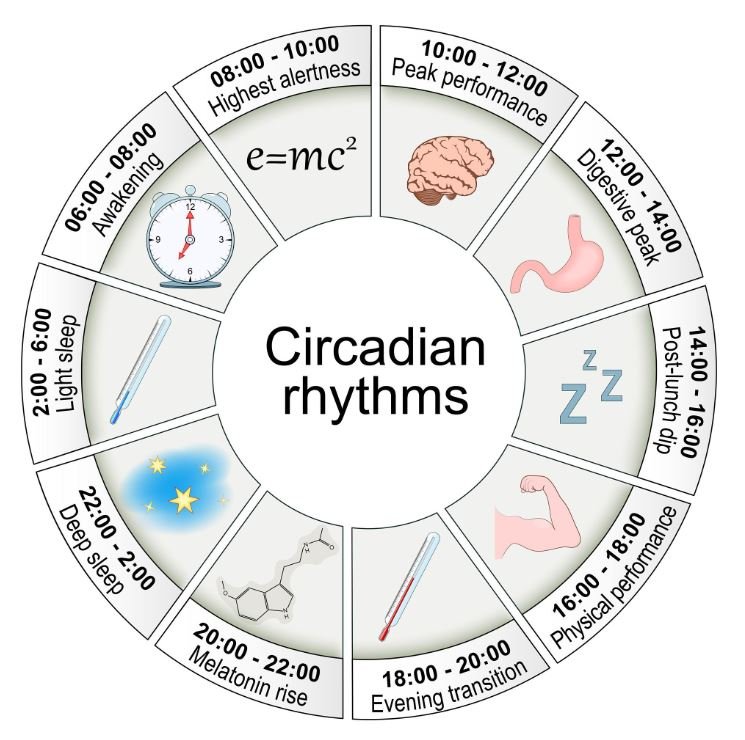
We’ve all been there: it’s 11:30 PM, you’re staring at a screen, and you tell yourself, “Just 15 more minutes.” Before you know it, it’s well past midnight. The next morning, you hit snooze three times, stumble to make coffee, and spend the first half of your workday dragging yourself through basic tasks.
Most productivity hacks tell you to push harder, time-block every minute, or wake up at 5:00 AM through sheer willpower. But the real secret to getting more done isn’t waking up earlier—it’s going to bed earlier.
Shifting your bedtime just an hour or two earlier can completely change how you feel and work, giving you back up to 30% of your daily focus and energy [1]. Here is how your body’s clock actually works, and how you can fix your sleep routine without feeling miserable.
Why Late-Night Work Is a Trap
When you stay up late to finish tasks or scroll through your phone, you aren’t getting high-quality time. As your brain gets tired, your focus drops off a cliff.
Think of it like running a race with a 1% phone battery. Everything takes longer, mistakes happen easily, and simple decisions feel exhausting [1].
- The Late-Night Trap: High Effort + Low Energy = Slow, Frustrating Work
- The Early-Morning Power Hour: Low Distractions + Fresh Energy = Peak Focus
When you shift that late-night hour to the morning, you swap your worst, most distracted hours for your best, sharpest ones [3].
The 3 Chemicals That Control Your Sleep
Your brain runs on a natural 24-hour cycle controlled by three main ingredients [2]:
- Melatonin (The Sleep Signal): Your brain naturally releases this when it gets dark to tell your body it’s time to rest [4].
- Cortisol (The Energy Spark): This naturally surges right after you wake up, giving you the natural jumpstart you need to take on the day [2].
- Adenosine (The Tiredness Meter): This chemical builds up in your brain every hour you are awake. The more adenosine you have, the sleepier you feel [3].
If you try to force yourself to go to bed three hours earlier overnight, your brain gets confused. To change your routine for good, you have to adjust these chemicals gradually.
A Simple 4-Step Plan to Move Your Bedtime
You don’t need to transform your life in a single night. Follow this simple step-by-step approach instead [2].
1.Set a Fixed Wake-Up Time:Fix your wake-up time first.
Pick a realistic wake-up time and stick to it seven days a week. Your body resets its internal clock based on when you wake up, not when you fall asleep. Even if you fall asleep late at night, wake up at your target time anyway to build up tiredness for the next evening.
2.Shift by 15 Minutes at a Time:Go slow to avoid tossing and turning.
Don’t try to go to bed two hours earlier on night one. Move your bedtime and wake-up alarm 15 minutes earlier every two or three days. This gives your body time to adapt without leaving you wide awake in the dark.
3.Get Morning Sunlight Immediately:Signal your brain that the day has started.
Within 30 minutes of waking up, step outside for 10 to 15 minutes of natural sunlight. Morning light stops sleep melatonin production and sets a timer for your body to feel sleepy again 14 to 16 hours later [4].
4.Dim the Lights 2 Hours Before Bed:Help your mind unwind.
Bright overhead lights and glowing screens trick your brain into thinking it’s still daytime. Turn off bright overhead lights, use warmer lamp light, and put down your phone an hour or two before bed to let melatonin do its job [4].
Setting Up Your Bedroom for Deep Sleep
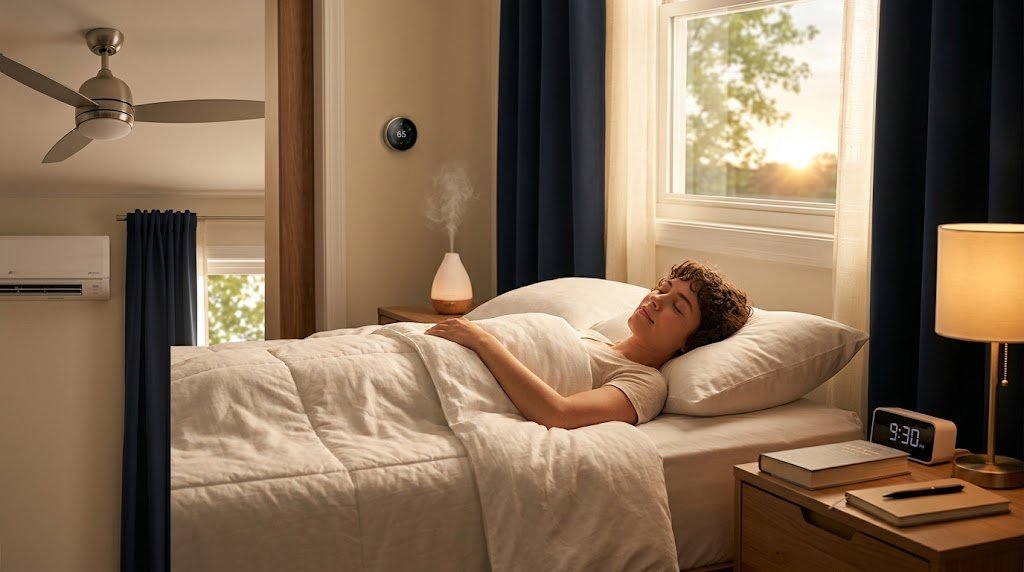
To get the most out of your rest, your bedroom should feel like a quiet sanctuary. Small changes can make a massive difference in how deeply you sleep [3]:
- Keep It Cool: Set your room temperature between 65°F and 68°F (18°C – 20°C). Your body needs to cool down slightly to fall into deep sleep.
- Make It Dark: Use blackout curtains or an eye mask. Any light coming through your room can disrupt your sleep quality [4].
- Block Out Noise: Use a fan or a white noise machine to drown out background noise and prevent sudden wake-ups.
- Keep Air Fresh: Keep a window cracked or use an air purifier to keep fresh air circulating.
Are You Really a “Night Owl”?
A lot of people assume they are just “night owls” who can’t fall asleep early. While a small percentage of people are naturally wired that way, most “night owls” are actually dealing with habits that keep them awake late [5].
The 3 Biggest Night-Owl Traps
- Late-Night Screen Time: Browsing social media or watching TV late at night keeps your brain wired and tricks it into thinking it’s daytime [4].
- Afternoon Coffee: Caffeine can stay in your system for up to 12 hours. A cup of coffee at 3:00 PM can still keep your brain active at 11:00 PM [3].
- Revenge Bedtime Procrastination: Staying up late because it feels like the only personal free time you get all day.
Fixing these small habits usually reveals that going to bed earlier is much easier than you thought.
How to Use Your Fresh Morning Hours
Once you start waking up earlier and feeling rested, guard your morning time carefully [1]:
- No Distractions: Don’t check your email, news, or social media right after waking up. Keep your mind calm.
- Quiet Focus: Enjoy the quiet hours while the rest of the world is still asleep or caught in traffic.
- Do Your Hardest Task First: Use the first 90 minutes of your day to tackle your biggest, most important project when your brain power is at 100%.
For anyone looking to build better daily routines and stay accountable, platforms like Yourise.me offer simple tools to track your habits and optimize your daily workflow over time.
References
- Walker, M. (2017). Why We Sleep: Unlocking the Power of Sleep and Dreams. Scribner.
- Czeisler, C. A., et al. (1999). “Stability, precision, and near-24-hour period of the human circadian pacemaker in young and older people.” Science, 284(5423), 2177-2181.
- Huberman, A. D. (2021). “Tools for Managing Stress & Anxiety; Sleep & Circadian Rhythms.” Huberman Lab Podcast.
- Zeitzer, J. M., et al. (2000). “Sensitivity of the human circadian pacemaker to nocturnal light: melatonin suppression and phase resetting.” The Journal of Physiology, 526(3), 695-702.
- Roenneberg, T., et al. (2007). “The circadian clock and human health.” Current Biology, 17(6), R210-R213.



Leave a Reply